As Ukraine pushes back against Russian military forces, its anti-corruption bodies are simultaneously waging a domestic campaign against the systemic graft that has long plagued its institutions and tarnished its international reputation.
The National Anti-Corruption Bureau of Ukraine and the Specialized Anti-Corruption Prosecutor’s Office have ramped up enforcement in recent weeks, announcing multiple new investigations targeting senior officials, lawmakers, and defense-sector figures.
Among the latest cases, authorities notified an officer of Ukraine’s domestic security service that he is suspected of attempting to arrange a $150,000 bribe to facilitate the return of seized funds and the closure of a criminal case. Days earlier, investigators uncovered an alleged scheme involving the theft of armored vehicle parts by a deputy commander stationed in the Kharkiv region. Other probes involve a suspected $1 million bribe linked to drone supply contracts, fraudulent road repair schemes, and an alleged 170 million hryvnia embezzlement case at Energoatom, the state nuclear power company.
The most politically sensitive investigation remains the so-called Operation Midas case, which alleged a $100 million kickback scheme tied to Energoatom. The case sent shockwaves through Kyiv’s political establishment because it touched the energy sector at a time when Russia was actively targeting Ukraine’s power infrastructure, and because individuals connected to the presidential circle were drawn into the probe.
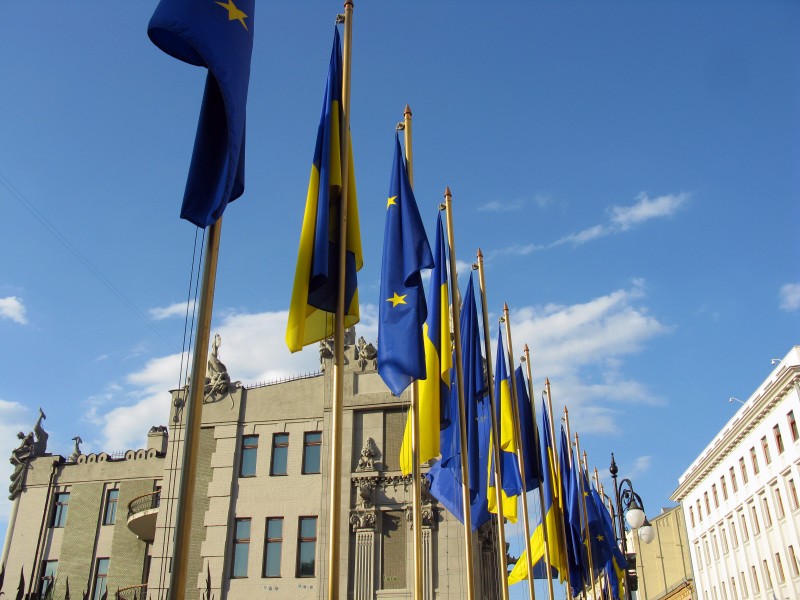
Officials and analysts say the anti-corruption push serves a dual purpose: it reassures Ukrainian citizens that public funds are not being wasted while the army needs every resource, and it signals to Brussels that Kyiv remains committed to the rule-of-law reforms required for European Union membership. Ukraine and the EU formally opened accession negotiations on the fundamentals cluster, which covers rule of law and democratic institutions, in mid-June 2026.
A Ukrainian lawmaker described the fight against corruption as the country’s top priority in public opinion surveys, emphasizing that every hryvnia lost to graft is a hryvnia taken from military defense. The anti-corruption agencies are now seen as performing the most critical civilian work in the country, helping Ukraine allocate its resources more effectively under wartime conditions.
However, the path has not been without setbacks. In July 2025, parliament passed legislation that critics argued would undermine the independence of the anti-corruption agencies. Following rare wartime protests and pressure from European partners, President Volodymyr Zelensky reversed course and signed a bill restoring the agencies’ autonomy, though legal experts cautioned that some concerns persisted.
Civil society leaders have framed corruption as a national security issue rather than merely a matter of justice. They argue that graft weakens state institutions and drains resources that should be protecting soldiers and critical infrastructure, making it effectively an ally of the enemy during wartime.