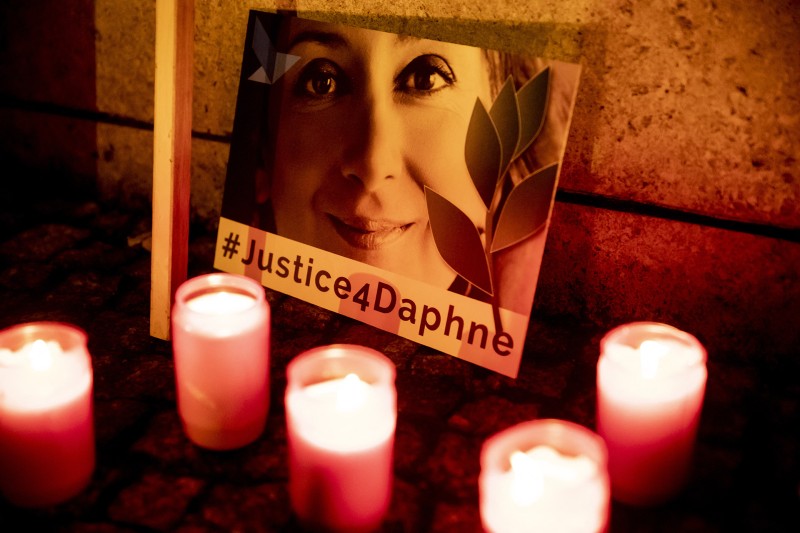
Nearly nine years after a car bomb silenced renowned investigative journalist Daphne Caruana Galizia, the high-stakes trial of the businessman accused of masterminding her killing began this week in Valletta. The landmark case, which has captivated the nation, marks one of the most significant legal proceedings in recent Maltese history.
On 16th October 2017, Caruana Galizia was killed when a bomb, placed under the driver’s seat of her car and detonated via text message, exploded near her home outside Mosta. The attack sent shockwaves through the country and the global press-freedom community.
Five individuals have already been convicted for their roles. Among them, brothers Alfred and George Degiorgio were each sentenced to 40 years in prison after pleading guilty, while Vince Muscat, a hitman, received a reduced 15-year sentence. Robert Agius and Jamie Vella were handed life sentences for supplying the explosives, with their appeals rejected earlier this year.
Now, all eyes are on Yorgen Fenech, a figure at the helm of the powerful Tumas Group conglomerate, which has deep ties in energy, gaming, and hospitality. Prosecutors allege Fenech ordered and financed the assassination. He has pleaded not guilty and denies all charges.
Fenech was arrested in November 2019 after authorities intercepted his yacht as he allegedly tried to leave the country. He spent over five years in pretrial detention before being granted bail in January 2025, under strict conditions including a €200,000 guarantee and round-the-clock surveillance. The decision to release him was widely criticized by Caruana Galizia’s family and press advocates.
The trial’s key witness is Melvin Theuma, the self-confessed middleman who received a presidential pardon in 2019 for his testimony. Prosecutors say Theuma had a close relationship with Fenech and that the tycoon orchestrated the plot.
Fenech has accused Keith Schembri, former chief of staff to ex-Prime Minister Joseph Muscat, of being the true mastermind. This claim has added a layer of political intrigue to the proceedings.
One of the convicted hitmen, Vince Muscat, is also expected to testify. Meanwhile, the 17 Black company, linked to Fenech and central to separate corruption and money-laundering cases involving Schembri and former minister Konrad Mizzi, remains a focus of investigations.
As the trial unfolds, it underscores a long-awaited reckoning for one of Europe’s most brazen attacks on a journalist.