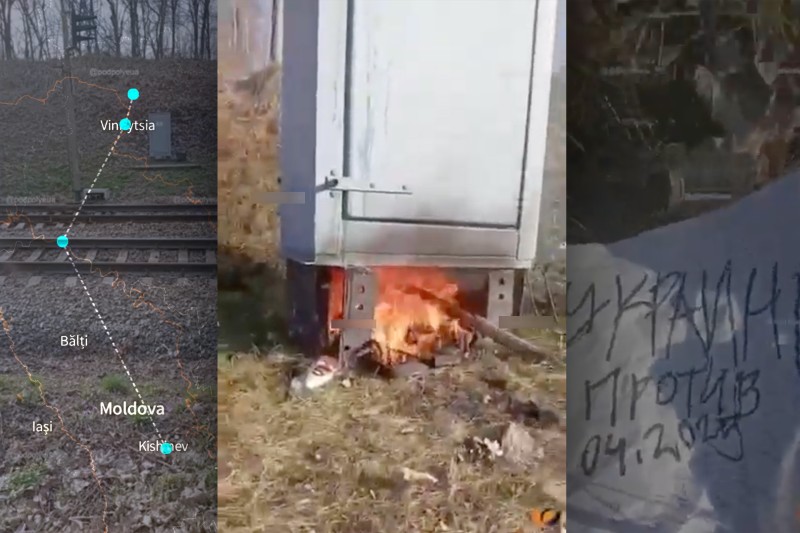
A growing pattern of low-cost sabotage operations in Ukraine, carried out by foreign recruits recruited through social media, is being exploited by pro-Russian propaganda networks to fabricate the appearance of an organized underground resistance movement, according to Ukrainian authorities and court records.
The scheme follows a consistent template: vulnerable individuals from neighboring countries are contacted via messaging apps, offered small payments to carry out acts of vandalism, and instructed to film themselves holding signs with anti-government slogans. The footage is then published on Telegram channels that frame it as evidence of a domestic Ukrainian opposition movement.
One case involved two young men from Moldova who traveled to central Ukraine in April 2025 and set fire to a railway equipment cabinet. The fire, which did not cause significant disruption, was filmed with a handwritten sign reading “Ukraine Against” in Russian. The video appeared on a pro-Russian Telegram channel that claimed it was the work of a Ukrainian dissident group.
Court records show the two men, both in their mid-twenties with prior drug convictions and limited employment prospects, were motivated by a promised payment of approximately $300. They received $200 upfront for travel expenses and were to receive $100 more upon completion. Both were convicted of sabotage and sentenced to 10 years in prison.
Ukrainian prosecutors say 18 other foreigners have been convicted on sabotage-related charges since 2024, joining hundreds of Ukrainians convicted of similar acts since the start of Russia’s full-scale invasion. The country’s security services say they suspect the operations are ultimately directed by Russian intelligence, with a notable increase in such attacks since 2023.
The recruitment strategy specifically targets individuals with profiles that make them susceptible to manipulation. Recruiters operating through messaging applications seek out people with drug or alcohol dependencies, criminal histories, and financial desperation. They assign narrow tasks, request video proof, and pay through cryptocurrency wallets without ever meeting their operatives in person.
Security experts describe this model as a clandestine gig-economy approach to sabotage, noting that the recruits are often unaware of the broader political purpose of their actions. Many do not understand whose interests they are serving, and those in the chain of command treat them as expendable.
Ukrainian authorities and analysts emphasize there is no evidence of a genuine nationwide resistance movement against the government. Public opinion surveys show only a tiny minority of Ukrainians hold positive views toward Russia. The sporadic acts of vandalism are commissioned and directed remotely, not the product of any coordinated domestic opposition.
The goal of the propaganda campaign is to create a perceived rift between the Ukrainian people and their leadership, providing a narrative pretext for the war. Experts warn that while the physical damage from these operations is often minimal, the psychological impact of creating an illusion of internal opposition serves Moscow’s strategic interests.