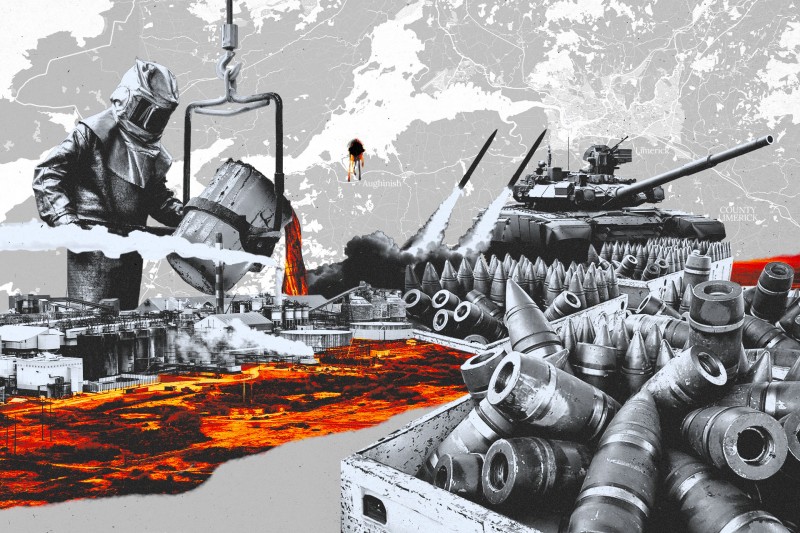
Europe’s largest alumina refinery, located on the western coast of Ireland, is shipping the majority of its exports to Russian aluminum smelters whose products ultimately reach sanctioned weapons manufacturers, according to trade data and leaked transaction records.
The Aughinish Alumina plant in County Limerick processes bauxite into alumina, the raw material needed to produce aluminum. While the European Commission has called on member states to stockpile alumina as a defense against hostile powers, more than half of the refinery’s exports since 2023 have gone to smelters in Russia owned by its parent company, United Company Rusal.
After processing the alumina into aluminum, the Russian smelters have sold more than $650 million worth of metal to a Moscow-based trader that supplies clients including dozens of EU-sanctioned Russian weapons manufacturers. These firms produce missiles, drones, and aircraft that have been used in attacks on civilian infrastructure in Ukraine, including hospitals and residential buildings.
The alumina exports are entirely legal under EU trade rules. The bloc has not restricted the export of alumina to Russia despite recognizing its strategic importance for military production. The European Union banned imports of Russian aluminum in February 2025 to cut off Moscow’s war funding, but took no action on outbound alumina shipments.
Legal experts say the lack of restrictions reflects a difficult balance EU policymakers must strike between stemming the flow of materials to Russia and protecting their own economic interests. The refinery employs hundreds of workers and supplies alumina to European industries.
The refinery’s parent company, Rusal, was briefly sanctioned by the United States in 2018, causing global aluminum price surges. The company was delisted after its founder reduced his stake. The founder, an ally of President Vladimir Putin, remains under EU sanctions, but Rusal itself has not been targeted.
Irish lawmakers have repeatedly raised questions about the refinery’s role in supplying Russia’s military-industrial complex, but government officials have maintained that the exports comply with EU sanctions. The company states it operates in strict compliance with all applicable EU laws and has implemented robust sanctions compliance frameworks.
Ukrainian officials and sanctions researchers warn that Europe’s continued entanglement with Russia’s metallurgical sector not only enables attacks on Ukrainian civilians but also poses a strategic risk to the continent itself.