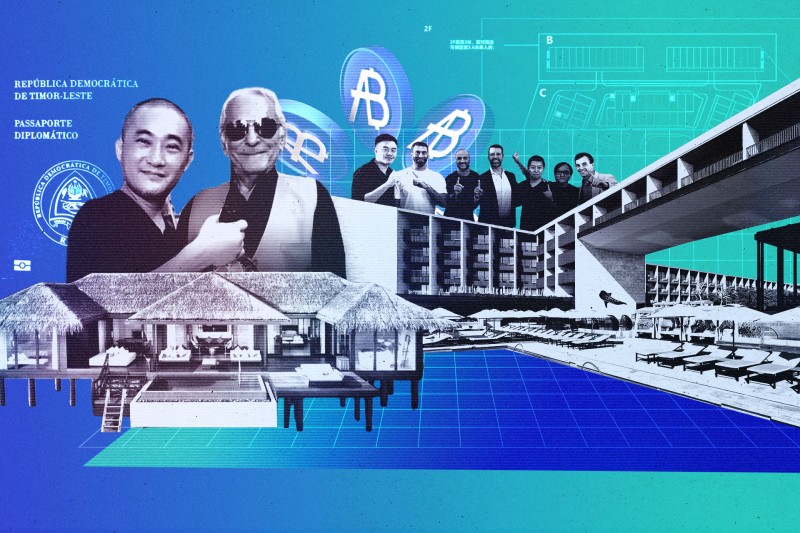
A relatively obscure blockchain network that forged a partnership with a cryptocurrency firm affiliated with the Trump family had previously pursued a major resort project in Timor-Leste involving individuals later sanctioned by the U.S. Treasury for alleged links to a massive online scam syndicate.
In November, the network, known as AB, announced a collaboration with World Liberty Financial, a digital currency enterprise co-owned by the family of President Donald Trump. The deal allowed AB to host a World Liberty-backed stablecoin on its blockchain network.
However, an investigation by journalists reveals that the planned resort project in the impoverished Southeast Asian nation involved three people who were later blacklisted by Washington as part of a crackdown on the Prince Group, a Cambodian conglomerate accused of operating one of the world’s largest online fraud operations.
The U.S. government has alleged the Prince Group is part of an industry that steals tens of billions of dollars annually from victims through scam compounds across the region. Last year, the U.S. seized $15 billion in bitcoin from the group’s CEO, Chen Zhi.
There is no evidence AB itself is linked to the Prince Group, and the sanctioned individuals were removed from the resort project shortly after the penalties were announced. No charges have been filed against them, and neither World Liberty nor the political figures involved said they were aware of the connections.
The resort, described as a “flagship project” on AB’s website, was to be a 300,000-square-meter development off the coast of Dili. Promotional materials touted it as a hub for crypto innovation, with the network’s philanthropic arm receiving a share of future profits. The project was canceled in November, before reaching any substantive stage, according to a statement from AB.
The corporate structure behind AB has long been opaque. Investigators identified two ethnic Chinese businessmen as key figures: Sui Chenggang, who described himself as the “initiator” of the AB ecosystem, and Lin Xiaofan, a Guangdong-born entrepreneur who facilitated connections with powerful figures, including Timor-Leste’s president.
Lin acknowledged his role in the resort and denied any connection to the Prince Group. He also said he introduced Sui to World Liberty executives.
Documents show that Yang Jian, a sanctioned individual accused of working with Prince Group’s CEO on a separate resort in Palau, was initially a majority shareholder in the Timorese company overseeing the project. Two other sanctioned people also worked on the resort, according to interviews and documents, but were removed after the sanctions were imposed.
The collaboration between AB and World Liberty remains in effect, though adoption of the stablecoin has been minimal. The White House has stated that President Trump and his envoy, Steve Witkoff, have no role in the company’s decisions.