July 17, 2026
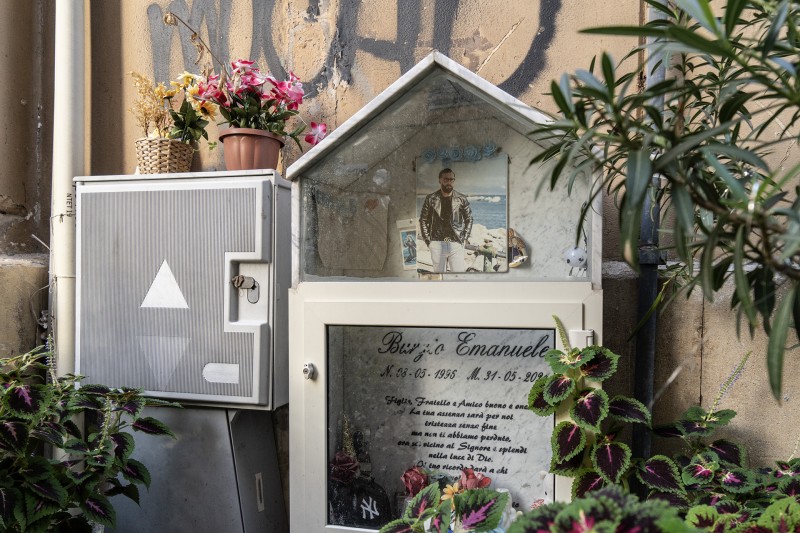
A plaque in Palermo honors Emanuele Burgio, son of a convicted mafia figure, who was killed in 2021 over a traffic dispute.
Italy’s parliament has approved a historic measure to create a nationwide system of protections for children and mothers who want to leave the country’s powerful organized crime groups, formalizing a strategy to end the generational transmission of criminal activity.
The Senate unanimously passed the “Free to Choose” bill on Wednesday, closing key legal gaps that had left families fleeing mafia clans vulnerable to retaliation. This final step follows approval in the lower house earlier this year.
The legislation converts a local experimental court process into a fully funded national initiative. It builds on work started in 2012 by Roberto Di Bella, a juvenile judge in Calabria, home base of the ‘Ndrangheta, now Italy’s wealthiest and most dangerous drug syndicate.
For more than a decade, Di Bella’s program has quietly moved children—and mothers who join them—from southern regions like Calabria and Sicily to secret locations in northern and central Italy.
The approach treats mafia membership not just as a crime issue but as a harmful environment for minors. By removing children from homes where they are taught violence and silence, the state cuts the family lines that support these networks.
“When I issued my first rulings, I never thought the judicial method from a small frontline court would go this far,” Di Bella said. “This law could be a turning point in preventing youth crime and fighting organized crime.”
Data from Di Bella shows the justice system has removed over 200 children from known mafia families. About 80 percent of those who reached adulthood rejected crime, he noted. The program has also helped 34 women leave mafia households and convinced three top bosses to cooperate with authorities.
Despite successes, the pilot program had a major legal flaw: women fleeing mafia marriages could not change their names. Without new identities, building a normal life was nearly impossible.
“Having the chance to earn money is their path to freedom,” said Senator Enza Rando, a member of the Antimafia Commission who has sheltered fleeing mothers. “But if they sign a work contract, the mafia can find them. Many face death threats.”
The new law fixes this. Juvenile courts can now order immediate relocation, provide cover documents, and issue legal name changes. It also guarantees state-funded support, including psychological help, housing, job training, and legal employment.
The law’s expansion comes amid debates about state power. To enable escapes, courts sometimes revoke or limit parental rights of uncooperative mafia parents.
Critics say removing parental rights due to family criminal ties sets a worrying precedent for government interference in family life.
Supporters argue that children in mafia families lack the freedom to choose a crime-free life, stressing that each case is reviewed carefully and parental rights are not permanently taken away.
For Rando, the law’s passage ends three and a half years of advocacy. She received emotional messages from women she had helped hide as the Senate voted.
“Their stories, often invisible, were finally discussed in the Senate,” Rando said. “When legislation improves lives of women and children while fighting organized crime, it’s a major achievement. Cultural prevention is the only way to truly win this battle.”