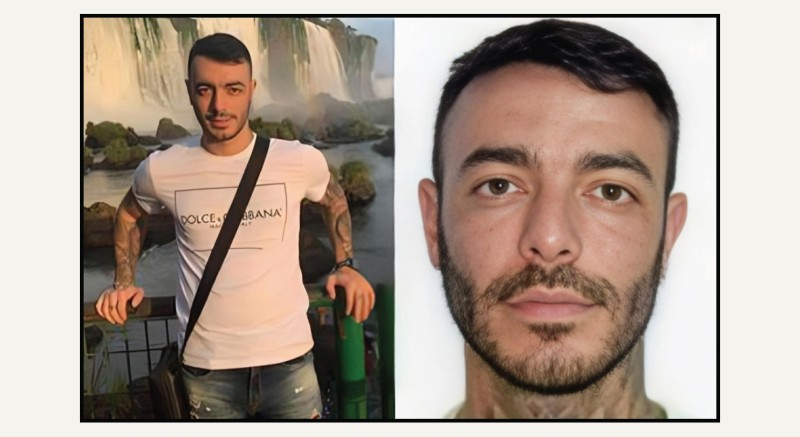
Federal prosecutors have indicated they are preparing to bring additional charges against accused South American narcotics kingpin Sebastián Marset, as the defendant agreed to postpone his right to a speedy trial during a court appearance in Virginia.
Marset, a 34-year-old Uruguayan national who had been operating primarily out of Paraguay before his capture, appeared before Judge Rossie D. Alston Jr. at the U.S. District Court for Eastern Virginia. Dressed in a dark green prison jumpsuit and white sneakers, he shook hands with his Miami-based attorneys and signed a waiver for a prompt trial.
The current indictment charges Marset with conspiracy to commit money laundering, alleging he used American and European financial institutions to funnel millions of dollars in drug profits. If convicted, he faces up to 20 years in federal prison, followed by three years of supervised release, and a fine of at least $500,000.
However, prosecutor Anthony T. Aminoff told the court that a superseding indictment “is likely,” suggesting the government plans to escalate the legal action against the heavily tattooed suspect. A superseding indictment typically adds new charges to an existing case, potentially including drug trafficking charges that carry more severe penalties.
Although the current indictment repeatedly references large-scale drug trafficking operations, it does not yet formally accuse Marset of that crime. The document alleges he led a criminal network that moved “thousands of kilograms of cocaine, including as many as 10 tons at a time, from South America typically to Europe.”
Authorities have linked Marset’s organization to more than 16 tons of cocaine seized in European ports, according to the U.S. State Department. The department had placed a $2 million bounty on him before his capture, describing him as “a most-wanted fugitive throughout the Southern Cone of South America.”
Marset was arrested on March 13 in southern Bolivia during a surprise early morning raid, and was promptly extradited to the United States. His arrest followed renewed regional cooperation on anti-narcotics efforts, including a summit convened by the Trump administration in early March.
The defendant also faces charges in Paraguay for international drug trafficking, criminal association, and money laundering. Uruguayan authorities have linked him to criminal enterprises there but have not yet filed formal charges.
The judge granted both parties a delay until May 20 for a status conference, allowing time for negotiations and the potential expansion of the indictment.