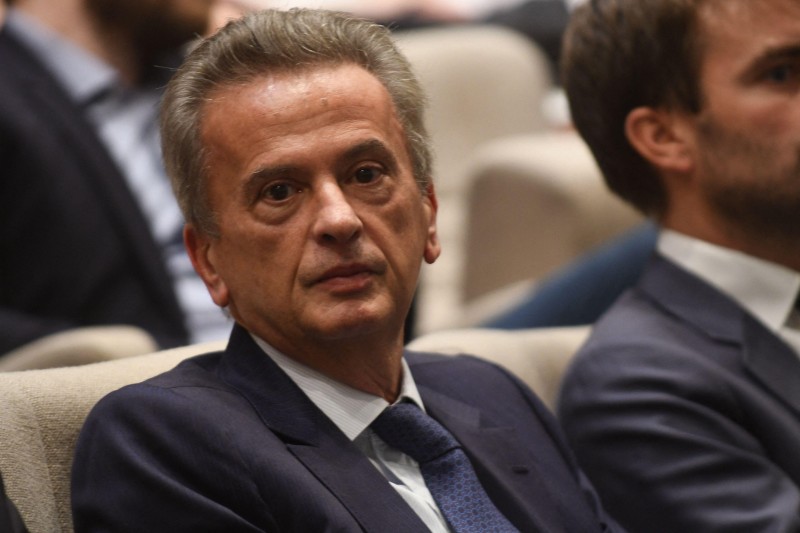
A judicial decision has been made to release the former head of Lebanon’s central bank, Riad Salameh, after a bail payment of over $20 million was approved. The 75-year-old official faces charges of misappropriating $44 million from public funds.
This ruling comes almost a year after Salameh’s arrest in September 2024 on numerous financial allegations, which include embezzlement and illicit enrichment. In April, a judge had referred him to face trial over these accusations.
As part of the release conditions, the court also imposed a one-year travel ban on Salameh. His legal representative, Mark Habka, described the bail sum as “unlawful” and indicated plans to appeal for a reduction. However, as of Tuesday, Salameh remained in custody despite the court order.
Under local criminal procedure, Salameh’s detention was due to end on September 4 in any case, after the maximum allowable pretrial holding period of six months, renewable only once, expired.
Former public prosecutor Ghada Aoun argued that bail is not compulsory in such grave offenses. The alleged actions, she noted, “resulted in the collapse of Lebanon’s economy and the impoverishment of its people,” and judges are not required to permit release even after a year in custody.
The bail amount, set at $20 million plus 5 billion Lebanese pounds (approximately $55,655), is reportedly the largest ever imposed in the country. Aoun downplayed the figure, stating it was insignificant “considering the billions he stole.”
Economics professor Walid Marrouch from the Lebanese American University observed that compared to the $44 million embezzlement charge, the bail represents about half of that sum. International probes have estimated that Salameh diverted up to $330 million from the central bank. In this context, Marrouch noted, “the bail is only a much smaller fraction of the sums he is accused of misappropriating.”
Aoun cautioned that the release could allow Salameh to escape justice. “In my view, Riad Salameh will not be acquitted, but the system is merely trying to create the appearance of pursuing him by detaining him for a limited period,” she said, adding that if the current system remains, he will never face trial, with files diluted and cases lost due to complicit corruption.
Financial tax attorney Karim Daher echoed these concerns, stating that even if Salameh were acquitted, “nobody can doubt or pretend that he is not one of the main figures responsible for this financial collapse and turmoil.” He emphasized that the broader political and banking elite share responsibility.
Marrouch suggested that even if cleared in court, Salameh would likely remain condemned “in the court of public opinion” for his monetary policies. He attributed Lebanon’s collapse to decades of corruption and mismanagement by the political class, and expressed doubt that the legal system would deliver justice, given its history of obstruction by political interference.
Salameh, who led Banque du Liban for three decades until stepping down in July 2023, maintains his innocence, claiming his wealth stems from prior employment and personal savings.
He remains under investigation in several European countries, where he is suspected of embezzling Lebanese public funds and laundering them through real estate and offshore accounts. In 2022, the European Union’s judicial cooperation agency froze assets worth €120 million (around $140 million) linked to Salameh, including properties previously uncovered by investigative reports.
Daher noted that while legal tools for accountability exist, “they have not been used because of political blockage and obstruction by those who hold the power to decide on prosecutions.”