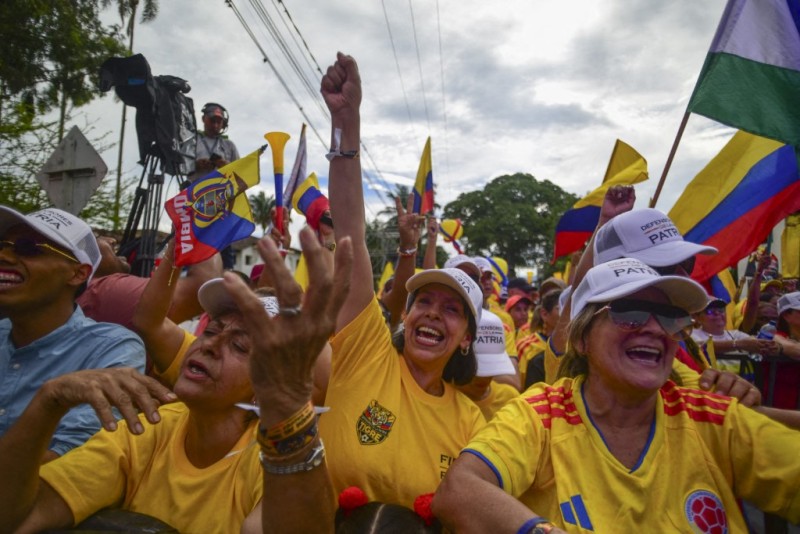
Colombians head to the polls on Sunday, driven more by fear than hope, as the country grapples with escalating violence and a deep sense of lawlessness. The election presents a stark dichotomy: one candidate advocates for negotiating with armed groups, while the other promises a brutal crackdown.
The nation has long suffered from internal conflict and organized crime. Despite a 2016 peace deal with guerrillas, violent groups have recently expanded into nearly half of the country’s municipalities, causing massacres, forced displacement, and extortion. A February survey highlighted public security as the top concern for nearly a third of respondents, followed by unemployment and the economy.
In the first round on May 31, Abelardo de la Espriella, a 48-year-old lawyer, emerged as the frontrunner with 43.7% of the vote. Campaigning as “The Tiger,” he uses emotional messages and a catchy soccer-style anthem to promise a militarized crackdown, including megaprisons and reclaiming territories from guerrilla groups. He has been endorsed by former U.S. President Donald Trump.
His rival, Iván Cepeda, a 63-year-old senator, secured 40.9% of the vote. He proposes a continuation of President Gustavo Petro’s policy of “conditioned dialogue” with armed groups and drug gangs, while targeting their finances and strengthening local economies. This approach has so far failed to curb record cocaine production and rising violence.
De la Espriella’s background is controversial. He has represented high-profile clients, including Alex Saab, a businessman accused of money laundering linked to Venezuela’s government. He also defended mayors and governors later convicted of collaborating with paramilitary groups and served as an adviser to Colombia’s main paramilitary group during disarmament talks.
Accusations of misconduct have surfaced. A former client claims de la Espriella took $2.5 million for his defense and then withdrew, and that he solicited bribes for congressmen. De la Espriella denies these allegations, asserting his actions were within the law.
Political analysts say supporters dismiss such reports as smear campaigns. Professor Johanna Amaya-Panche notes that voters may not care about candidates’ criminal ties, as such behavior is becoming normalized. “We’re in an environment where criminal activity or criminal legacies of presidential candidates is normalized,” she said.
The runoff election will determine whether Colombians choose a hardline security approach or a continued, yet flawed, peace negotiation strategy.