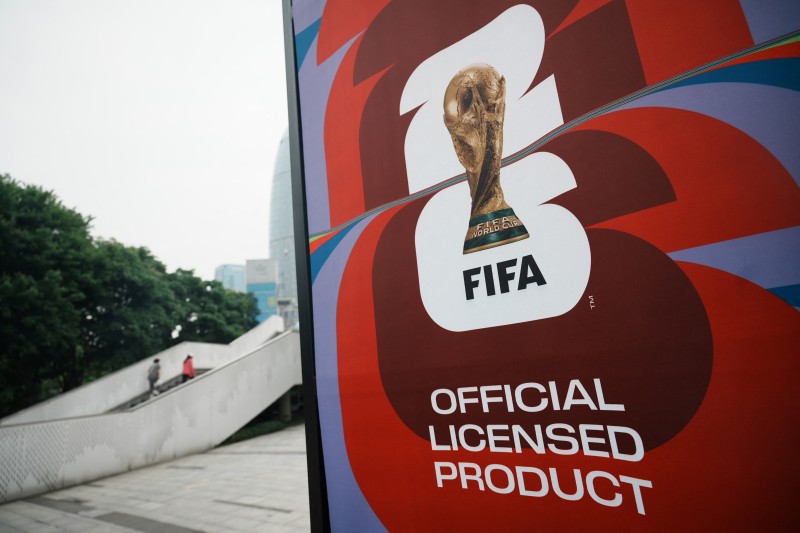
Mexico’s financial intelligence unit has quietly directed banks, fintech companies, and other financial institutions to step up monitoring of transactions potentially linked to terrorism financing and weapons of mass destruction proliferation, just weeks before the country hosts the global football championship.
The confidential directives, issued in April, were obtained by investigative outlets. The document details specific risk indicators designed to flag suspicious financial flows, according to compliance experts who reviewed the guidance.
Specialists noted that the timing aligns with the massive influx of international visitors, increased cross-border transactions, and heightened activity in hospitality, transportation, entertainment, and sports betting sectors. These factors create an exceptionally volatile financial environment, explained Paola Medellín Cervantes and Mónica Villarreal Medel from the Advanced Compliance Laboratory, a financial crime think tank.
“There will be tremendous cash circulation entering through multiple channels,” Villarreal cautioned. Experts emphasized that major events don’t necessarily indicate an imminent terrorist threat but significantly expand the pool of transactions that could mask or disperse illicit funds among legitimate operations.
Areas identified for reinforced oversight include gambling, short-term rentals, digital payment systems, cryptocurrencies, and certain patterns associated with human trafficking. “Illegal betting is routine in these scenarios,” Medellín stated.
Mexico’s financial system has historically prioritized anti-money laundering measures, but terrorism financing requires different analytical approaches. According to the specialists, money laundering focuses on concealing illicit origins, while terrorism financing tracks the ultimate destination of funds. “With laundering, you monitor entry points; with financing, you watch exits—where the money ends up,” Medellín explained.
While experts acknowledge Mexico has adequate regulatory foundations to address these threats, they stress that existing protections need substantial strengthening, particularly regarding customer identification protocols and ownership transparency.
“We have readiness, but controls must be tighter and the system reinforced,” Villarreal said.
The directive acknowledges that Mexico currently has no documented cases of terrorism financing or weapons proliferation, but maintains that institutions must remain vigilant, especially concerning high-risk jurisdictions such as tax havens and suspicious transaction patterns.
Special attention is directed at regions influenced or controlled by terrorist groups and countries under international sanctions. Higher-risk accounts now require enhanced background checks on primary business activities and more rigorous transaction monitoring.
“The customer identification policy must reflect the transactional risk each client presents,” the document states.
Critical warning signs include transactions from non-profit organizations unable to properly account for fund destinations, frequent transfers to conflict zones, and matches with international terrorism databases. Financial institutions must freeze assets upon detecting suspicious transactions and notify authorities.
Institutions had until June 7 to submit new compliance frameworks to internal committees. After approval, they have 15 days to notify the National Banking and Securities Commission and 60 days to fully implement mandatory controls.
This regulatory push follows warnings from the Financial Action Task Force in 2025 that terrorist organizations are adapting by combining traditional banking with digital tools and sophisticated cross-border networks.
The situation gained urgency in January 2025 when the U.S. government began designating several Mexican drug cartels as Foreign Terrorist Organizations, shaking the financial sector. Experts note this designation requires institutions to assess whether financial services could facilitate resources for designated groups.
“Today, because of that designation, the risk is tangible and places financial entities in greater jeopardy, requiring stronger controls,” Villarreal concluded.