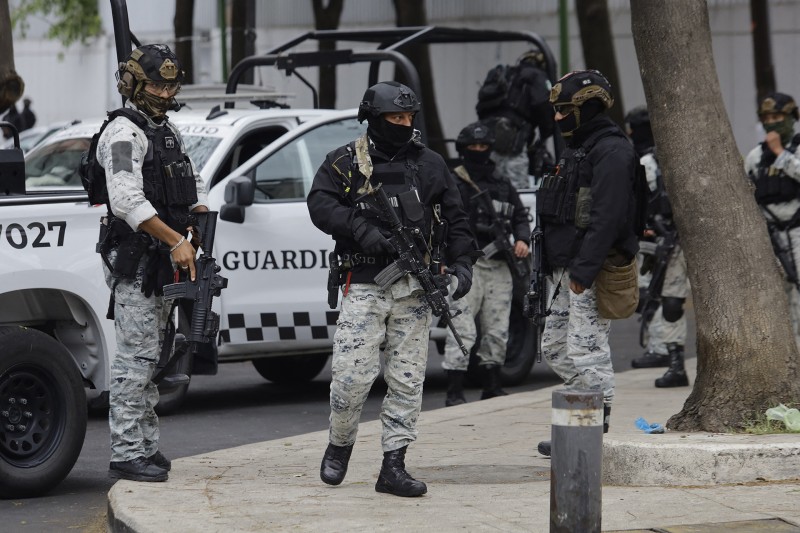
Authorities in western Mexico faced a surge of violence Sunday after security forces killed a prominent cartel leader in a raid backed by U.S. intelligence, disrupting daily life and raising questions about security for upcoming international events.
Nemesio Oseguera Cervantes, known as “El Mencho,” the alleged founder of the Jalisco New Generation Cartel, was slain during an operation in Tapalpa, officials reported. The Mexican Defense Department stated troops attempted to arrest him but came under attack, returning fire that resulted in his death along with six other cartel members. Unconfirmed reports suggest a higher death toll.
Within hours, suspected cartel operatives erected roadblocks, set vehicles ablaze, and targeted businesses across Jalisco and neighboring states, clashing with security forces and paralyzing transport. Authorities reported 252 blockades nationwide, with the heaviest concentration in Jalisco. Four soccer matches were canceled, and Puerto Vallarta’s airport halted all international flights and most domestic departures. Airlines including American, United, Delta, and Air Canada suspended numerous routes. The British Foreign Office and U.S. Embassy advised people to stay indoors and avoid unnecessary movement.
Some analysts speculate the operation’s timing may be linked to security concerns for the 2026 FIFA World Cup, which Guadalajara is scheduled to co-host. “I think something happened in the last few days that somewhat forced the Mexican government to make this decision,” said Eduardo Guerrero, director of Lantia Intelligence, suggesting worries about tournament security could have accelerated action. “It simply wasn’t acceptable to hold matches in a city that was practically taken over by a criminal group,” he noted.
Mexican President Claudia Sheinbaum urged calm, assuring coordinated federal and state response. Jalisco Governor Pablo Lemus described the situation as critical and ordered schools closed statewide.
The White House confirmed providing intelligence support, with press secretary Karoline Leavitt calling Oseguera “an infamous drug lord” and major fentanyl trafficker. The U.S. had offered a $15 million reward for information leading to his capture.
Security experts warn the cartel’s swift, organized retaliation demonstrates its operational reach, and Oseguera’s death could trigger a violent struggle for control. Guerrero emphasized uncertainty about whether potential successors were also killed, saying, “We have to wait to learn the names of those killed to know if there will be a change in leadership.”