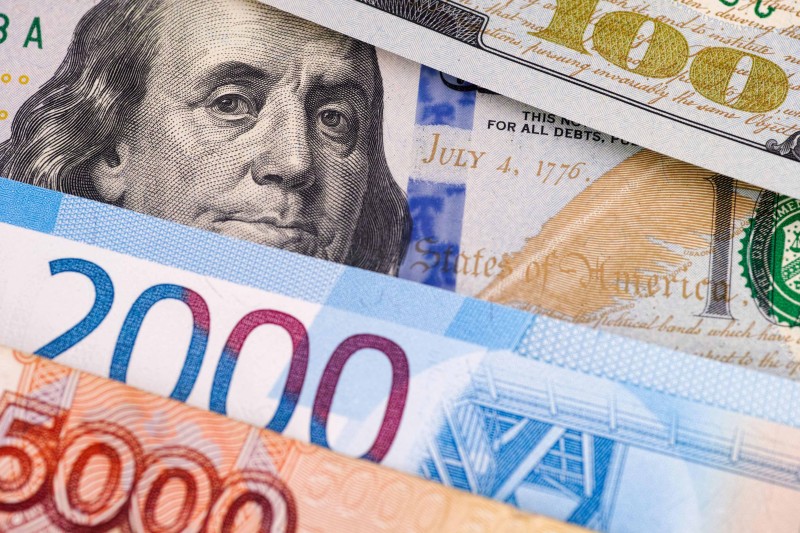
In the weeks preceding Russia’s full-scale military assault on Ukraine, three international financial firms transported approximately $12 billion in foreign currency into the country, according to customs data.
Austria’s Raiffeisen Bank International, U.S.-based security company Brink’s, and Bank of America collectively moved massive amounts of cash—mostly U.S. dollars, euros, and Swiss francs—to Moscow between early January and late February 2022.
Raiffeisen Bank International dominated the shipments, dispatching 189 deliveries worth roughly $10 billion. The transfers were legal at the time, as no currency export restrictions were in place prior to the invasion.
The recipient of all shipments was TBSS, a Moscow-based trading company that was later sanctioned by the United States in February 2024. The company’s headquarters also houses Russian government offices, including the customs authority.
Trade records indicate a sharp escalation beginning January 11, just days before Russian troops started arriving in Belarus. From that date until February 23, TBSS received 272 shipments averaging $44.78 million each—more than triple the average size seen between 2017 and 2021.
At least 10 deliveries from Raiffeisen arrived on or after February 24, as Russian forces advanced on Kyiv. The bank’s spokesperson, Christof Danz, stated that no cash deliveries occurred after the war began, though invoices suggest otherwise.
Raiffeisen, the largest Western bank still operating in Russia, has been under European Central Bank orders to reduce its presence there. CEO Johann Strobl confirmed ongoing efforts to sell its Russian subsidiary.
Bank of America sent five shipments worth $798 million over four weeks in early 2022. Spokesperson Bill Halldin noted the bank complied with all sanctions and that the Federal Reserve cleared the shipments’ destinations. The bank has since significantly reduced its Russian exposure.
Brink’s transported 64 shipments valued at $1.3 billion, primarily from Switzerland. The company stated it suspended all Russian business in early 2022.
Experts suggest the cash surge served multiple purposes: funding the planned invasion, securing cooperation from Ukrainian officials if Kyiv fell, and allowing wealthy Russians to withdraw assets from Western institutions before sanctions took effect.
The European Union and United States banned euro and dollar exports to Russia weeks after the invasion began.