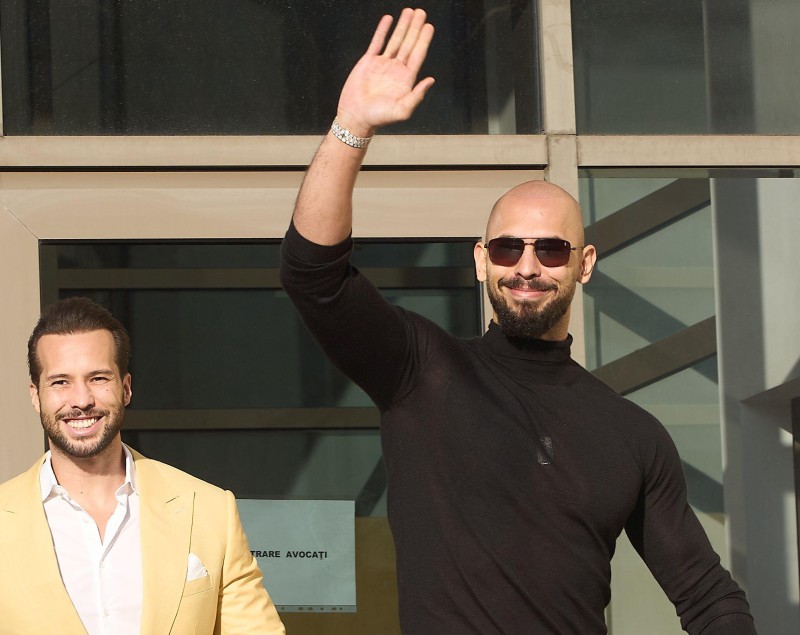
Romania’s justice minister has refuted claims that pressure from the United States led to the release of Andrew and Tristan Tate, who departed for Florida last week despite facing serious legal accusations. The duo, known for their controversial online presence and criminal charges in Romania and the United Kingdom, left the country amid allegations of coercion and exploitation.
Andrew Tate, a prominent social media personality with millions of followers, has openly boasted about generating substantial income through coercive online activities. Romanian officials, however, stressed that no foreign authorities made formal demands regarding the case. Justice Minister Radu Marinescu stated that he was unaware of any external pressure and declined to detail the legal basis for allowing the Tates to leave, citing a lack of familiarity with case specifics.
The decision baffled many legal experts, fueling speculation of a covert arrangement. A British law firm representing women accusing Andrew Tate of abuse expressed concerns that Romania may have yielded to improper influence from the Trump administration. Both brothers face extradition requests from the UK, where they are wanted on charges of rape and human trafficking, though they have denied all allegations.
A former Romanian prosecutor warned that this move could jeopardize the ongoing legal proceedings, noting the significant responsibility assumed by letting defendants depart to a country where they hold citizenship. The Romanian anti-organized crime agency has stated that the Tates must return for court hearings, but observers remain skeptical about their voluntary return.
The justice minister maintained that it would be in the Tates’ interest to appear in court, though he acknowledged that a verdict could be reached in their absence, potentially leading to extradition from the U.S. Romanian authorities have emphasized the countries’ shared legal cooperation mechanisms.
In Romania, the case has eroded public trust in the judiciary. Advocacy groups argue that the lack of transparency and suspicion of external influence send a damaging message—that wealth and political connections can override accountability. Despite official denials, the episode has deepened doubts about the impartiality of the justice system in high-profile cases.