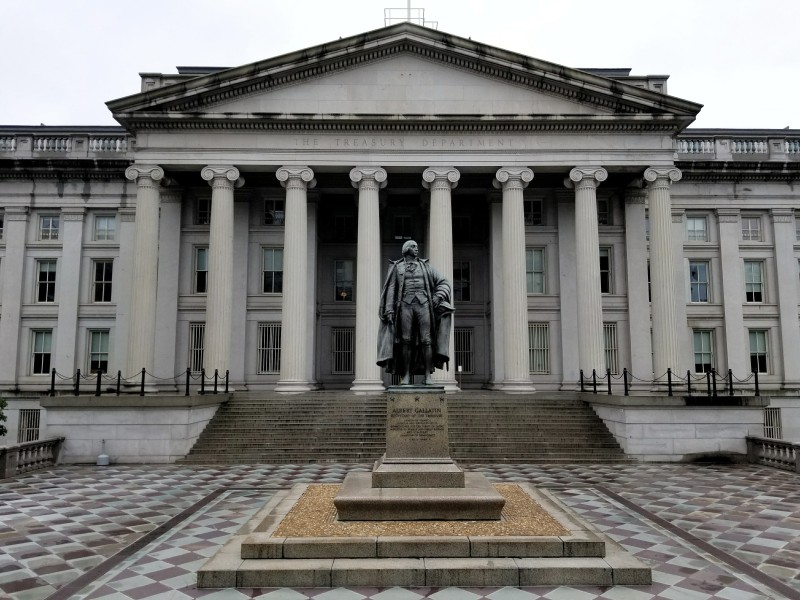
The United States has imposed financial sanctions on 19 individuals and companies across Southeast Asia, alleging these operations use forced labor to defraud American citizens of vast sums of money through online scams.
Regional analysts applauded the action but emphasized that local governments must intensify enforcement, while also suggesting the U.S. broaden its punitive measures.
“These sanctions hit some prominent Chinese organized crime figures and Myanmar militia leaders behind the scam centers,” noted Jason Tower from the Global Initiative against Transnational Organized Crime. “However, they should be widened to cover more key Chinese, Myanmar, and Cambodian players involved.”
According to a U.S. Treasury announcement on September 8, ten actors in Cambodia and nine in Myanmar were sanctioned, specifically those operating from Shwe Kokko—a border area with Thailand described as a notorious hub for fake cryptocurrency investment schemes.
The Karen National Army, a militia aligned with Myanmar’s military junta, controls Shwe Kokko. The U.S. had already sanctioned this group and its leader, Saw Chit Thu, in May.
Saw Chit Thu, alongside businessman She Zhijiang, developed Yatai New City, a sprawling compound in Shwe Kokko that has become a hub for scam activities reliant on coerced labor.
“Those running scams at Yatai New City reportedly trick recruits from around the world under false pretenses, then detain and physically abuse them, forcing them to work for criminal syndicates as online fraudsters,” the Treasury statement read. “Escapees have reported being held until families pay ransoms, beaten for missing quotas, or forced into commercial sex work.”
She Zhijiang was also sanctioned this week. Originally from China, he holds dual citizenship in Myanmar and Cambodia. Previous investigative reporting has linked him to a large Special Economic Zone in Cambodia, a site of multiple forced labor allegations at scam compounds.
Montse Ferrer, regional research director for Amnesty International, stressed that Cambodia must take stronger action against the rampant scam and human trafficking networks.
“We welcome steps by the international community to target these sophisticated operations involving slavery, torture, and child labor,” Ferrer stated. “Cambodia must now confront this scamming crisis by investigating these companies and individuals on its own. So far, it has only demonstrated awareness while failing to address the problem effectively.”
Cambodia’s Interior Ministry declared in June its “strong commitment” to working with other nations to “prevent, intercept, and suppress online crimes, human trafficking, and money laundering.”
Myanmar’s military government, in state-run newspaper reports on August 27, claimed it is “strictly cracking down on online scams and online gambling,” and noted the deportation of 57 foreigners involved in telecom fraud and other illegal activities in Kayin State, where Shwe Kokko sits.
However, researchers from think tanks like the Australian Strategic Policy Institute have tied these scam operations to the regime itself. A recent ASPI report, closely aligned with Australian foreign policy, alleges Myanmar’s junta “permits and facilitates scam projects to enrich military allies.”
The U.S. Treasury estimated that Americans lost approximately $10 billion in 2024 to Southeast Asian scam networks, marking a 66% increase compared to 2023.