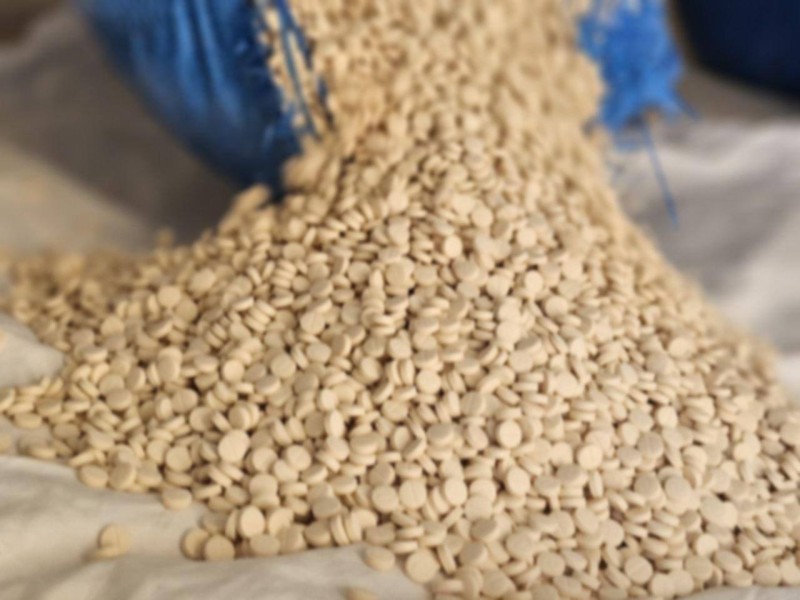
Authorities have successfully prevented the smuggling of 30,000 Captagon tablets from Syria into Iraq, according to an official announcement.
The interception occurred near the Al-Baghuz border zone, as reported by Interior Ministry spokesperson General Moqdad Miri. He noted that thermal imaging technology was instrumental in detecting the concealed narcotics. The tablets were reportedly disguised by being sealed in plastic containers, wrapped in fabric, and hidden within bundles of reeds.
Officials confirmed that standard legal procedures were implemented, though no details emerged regarding potential arrests.
This operation follows a recent major disruption where Iraqi forces confiscated 1.1 tons of Captagon originating from Syria via Turkey.
Captagon, originally a brand name for fenethylline, was developed in West Germany during the 1960s for medical treatments. However, after its global ban in 1986, counterfeit versions gained notoriety as recreational substances in the Middle East, particularly in Gulf nations and among conflict participants in Syria. Modern illicit batches often incorporate components like caffeine, theophylline, or paracetamol.
Iraq has evolved into a significant transit hub for drug trafficking. A 2024 United Nations report highlighted that in 2023 alone, authorities seized Captagon worth approximately $144 million.
Despite shifts in regional power dynamics, the Captagon trade persists. Following the ouster of Bashar al-Assad, Syrian interim President Ahmed al-Sharaa vowed to eliminate the drug industry, characterizing Syria as the world’s primary producer. Subsequent Syrian operations destroyed vast quantities of pills and raw materials, yet production and smuggling continue unabated.
Experts warn that the core challenge lies in dismantling manufacturing networks, not just intercepting shipments. Roaa Obaid, a researcher tracking Captagon seizures, emphasized that unapprehended producers can adapt and innovate. Meanwhile, Iraq faces a dual challenge, with raw materials reportedly entering from Iran on its opposite border for local or regional processing, destined for Gulf markets.