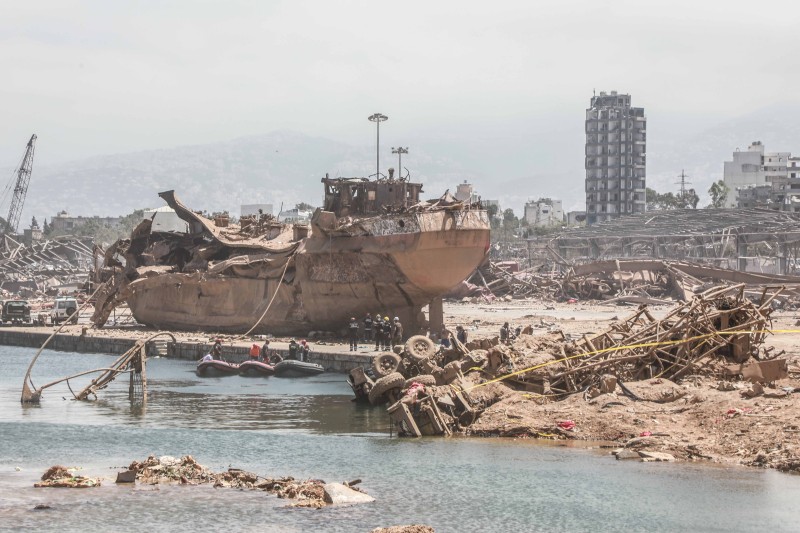
More than half a decade after the devastating explosion that shattered Beirut, an investigation into the tragedy has shown renewed momentum following recent political changes.
The disaster occurred on August 4, 2020, when nearly 2,800 tons of ammonium nitrate, stored unsafely at the port for years, detonated in a massive blast. The explosion killed at least 218 people, injured over 7,000, and destroyed vast areas of the city.
The hazardous material had been stranded in Beirut since 2013 after arriving on a Moldovan-flagged ship. Despite repeated warnings about the danger, the chemicals remained in a port warehouse for seven years.
A fresh push for accountability has emerged after the formation of a new government earlier this year. Justice Minister Adel Nassar and Prime Minister Nawaf Salam, who assumed office in early 2025, have both endorsed efforts to advance the stalled investigation.
Lead investigator Judge Tarek Bitar, who took on the case in 2021, faced persistent obstruction from political figures and legal challenges that halted his work for nearly three years. Attempts to question senior officials were repeatedly blocked.
The situation shifted after Judge Jamal Hajjar was appointed chief prosecutor, ending a ban on cooperation between security agencies and the judiciary. “The atmosphere has changed,” Nassar stated, describing this as a vital breakthrough.
Nassar outlined priorities including removing obstacles to the port investigation, filling vacant judicial positions, and implementing a long-awaited law to guarantee judicial independence.
However, hurdles remain. Around 40 lawsuits seeking Bitar’s removal have been filed, mostly by officials attempting to evade scrutiny. Approximately 30 of these cases are still pending. Former Public Prosecutor Ghassan Oueidat has accused Bitar of exceeding his authority—a move that could halt proceedings if successful.
Efforts to gather evidence from abroad have also faced delays due to slow responses to legal assistance requests from European and Arab nations.
France is expected to play a more prominent role after Lebanon formally sought French investigative cooperation. “I took the initiative to engage with France,” Nassar explained, noting parallel investigations in Paris.
Many implicated officials continue to avoid accountability. Arrest warrants for two former ministers remain unexecuted. While ex-Interior Minister Nohad Machnouk was recently questioned, others have ignored summonses, using legal tactics and political influence to delay proceedings.
Even if Bitar completes his inquiry, the case must go through Lebanon’s Court of Cassation before reaching trial—a process that could take months or years.
Nassar emphasized that thoroughness matters more than speed. “What matters is that the decision be thorough and address all aspects of the case,” he said.
Without justice, he warned, the state risks losing its legitimacy. “A state that fails to inform its citizens of the truth, hold those responsible accountable, or at the very least identify the perpetrators, has abandoned its role,” Nassar concluded. “Only the truth can deliver justice to the victims.”