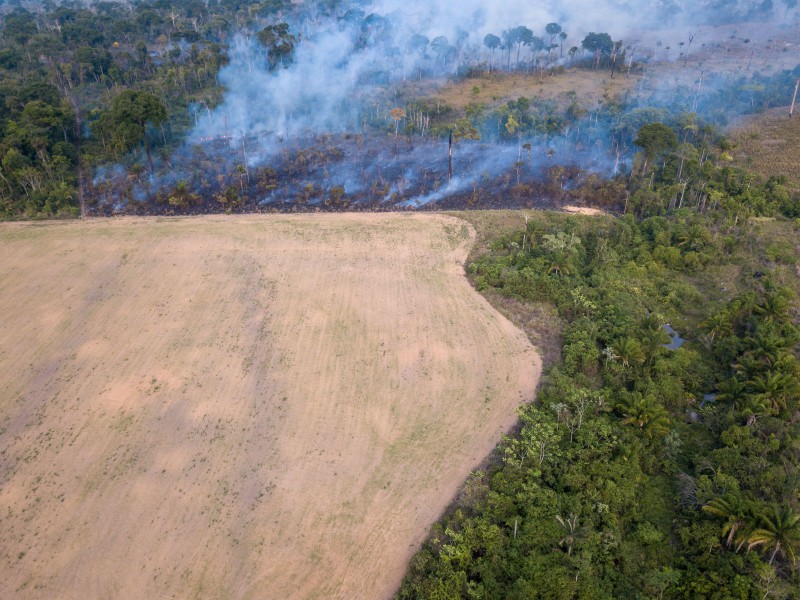
High-end fashion labels including Coach, Chanel, and Louis Vuitton are using leather derived from cattle raised on illegally cleared Amazon rainforest land, a new investigation has revealed. The probe, conducted by the British nonprofit Earthsight, traced connections between Brazilian slaughterhouses, Italian tanneries, and the luxury goods industry.
The research uncovered that two Italian tanneries supplying these brands obtained hides from Brazilian meatpackers linked to ranches operating on deforested areas and Indigenous territories. Using satellite imagery, shipping records, court documents, and undercover fieldwork, investigators tracked the leather’s journey, exposing how environmental crimes infiltrate the luxury market.
A key player in this supply chain is Frigol, one of Brazil’s largest meat processors. Earthsight found it purchased over 17,000 cattle from ranchers accused by federal prosecutors of illegally grazing animals on protected Indigenous land in Pará state. Despite recent claims by Brazil’s Public Ministry that Frigol had achieved “100% compliance” with environmental standards, this assessment only applied to its direct suppliers—a gap experts say allows “laundered” cattle to penetrate the system.
This practice, known as cattle laundering, has been previously documented by investigators in Pará’s beef industry. “The biggest flaw in cattle traceability here is the lack of individual animal identification and transparency about livestock movements,” said Camila Trigueiro, an analyst at the Brazilian nonprofit Imazon. “Slaughterhouses only know the last farm an animal passed through, not its full history.”
Another intermediary, Durlicouros—Pará’s top leather exporter to Europe and a hide buyer from Frigol—was previously sued in Brazil for sourcing from farms fined for illegal deforestation. Court arguments suggested the company should be held liable for profiting from environmental violations, even without direct involvement.
From these facilities, the leather traveled to Italian tanneries and entered the supply chains of globally recognized fashion houses. “When we learned about the Brazilian investigations, the immediate question was where the leather from these cattle was ending up,” said Lara Shirra White, an Earthsight researcher.
This is not the first time luxury brands have faced scrutiny over environmental impacts. A 2021 Stand.earth study connected over 100 global brands, including fast fashion companies, to Amazon deforestation through leather sourcing.
Upcoming European Union regulations will require companies to prove their products are deforestation-free. However, Italian tannery lobbyists are already seeking exemptions, raising concerns about enforcement. “The exposure of Europe’s leather supply chains to deforestation and Indigenous land rights violations linked to Frigol highlights the need for the EU Deforestation Regulation,” White noted.
The findings come just months before Pará state, epicenter of many deforestation-linked supply chains, hosts COP30—the UN summit where governments, NGOs, and the private sector assess climate progress.