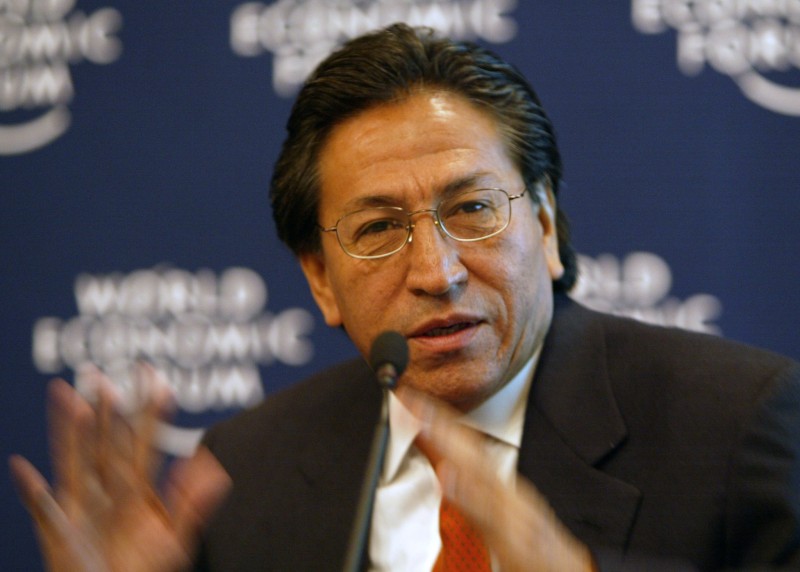
A Peruvian court has issued a fresh prison sentence against former President Alejandro Toledo, extending his legal troubles in connection with the massive corruption network tied to a Brazilian construction firm.
On Wednesday, the judiciary announced that Toledo, who governed the South American nation from 2001 to 2006, was convicted on money laundering charges and received a term of 13 years and four months. This marks his second conviction stemming from the far-reaching scandal. The new sentence will run at the same time as his existing 20-year prison term, meaning he will serve them concurrently at the Barbadillo Prison in Lima, a facility that currently houses three other former heads of state.
Prosecutors argued that the 79-year-old used illicit payments from the construction company to acquire expensive properties. Reports indicate he routed the funds through a shell company based in Costa Rica to conceal their origins.
Earlier this year, a separate court found Toledo guilty of accepting $35 million in bribes from the same firm. In exchange, he allegedly granted contracts for the construction of two segments of a major highway in southern Peru.
Toledo is not alone among the country’s former leaders caught up in the case. Last April, ex-President Ollanta Humala received a 15-year sentence for accepting bribes to fund his election campaigns in 2006 and 2011.
On the same day as Toledo’s latest sentencing, a court ordered the release of former President Martín Vizcarra, who had been held in pretrial detention since the previous month on accusations of taking bribes while serving as a regional governor.
In 2018, President Pedro Pablo Kuczynski stepped down after secretly recorded conversations linked him to the scheme, just before an impeachment vote. Another former leader, Alan García, took his own life in 2019 as authorities investigated his alleged role.
The bribery network, originating in Brazil, has ensnared politicians across the region. In Panama, two former presidents and numerous other officials faced trial in 2022. In Guatemala, a 2023 investigation revealed that the company used funds from a regional development bank to bribe state officials.
This case is widely regarded as one of the largest corruption scandals in Latin America. In 2017, U.S. courts ordered the company, now operating under a new name, to pay $2.6 billion in penalties after it admitted to disbursing approximately $800 million in bribes across a dozen countries.