The American government has formally classified eight criminal organizations from Latin America as foreign terrorist groups, a decision announced in a recent directive. This action stems from an executive mandate issued by President Donald Trump at the start of his term, which instructed authorities to assess whether these cartels warranted such a designation.
Under this directive, the State Department has included the Venezuelan-based Tren de Aragua, the Salvadoran gang MS-13, which originated in Los Angeles, and six Mexican cartels—Sinaloa, Jalisco Nueva Generación, Carteles Unidos, Noreste, Golfo, and La Nueva Familia Michoacana—on its terrorist list.
Trump argued that these groups represent a security risk exceeding that of typical organized crime, pointing to their “ongoing campaign of violence and intimidation across the Western Hemisphere” that has undermined regional stability and funneled “harmful narcotics, violent offenders, and dangerous gangs” into the United States.
The classification is based on the organizations’ engagement in or potential for committing “terrorist acts that endanger U.S. citizens, or the national security, foreign policy, or economic interests of the U.S.,” according to Secretary of State Marco Rubio in the notice. However, the department did not elaborate on which specific terrorist actions these groups have carried out.
Rubio described the move as an “economic measure” aimed at disrupting the cartels’ financial networks by prohibiting business dealings with them. “All these gangs rely on accessing the banking system, purchasing goods, and often forming commercial alliances,” he explained. Labeling them as terrorist groups is crucial because “it provides a powerful means to sever any partnerships they might have globally.”
In response, Mexican President Claudia Sheinbaum cautioned that this decision “must not be used as a pretext for the U.S. to infringe on” her country’s sovereignty. “With Mexico, it’s about collaboration and coordination—not subordination or interference, and certainly not invasion,” she stated.
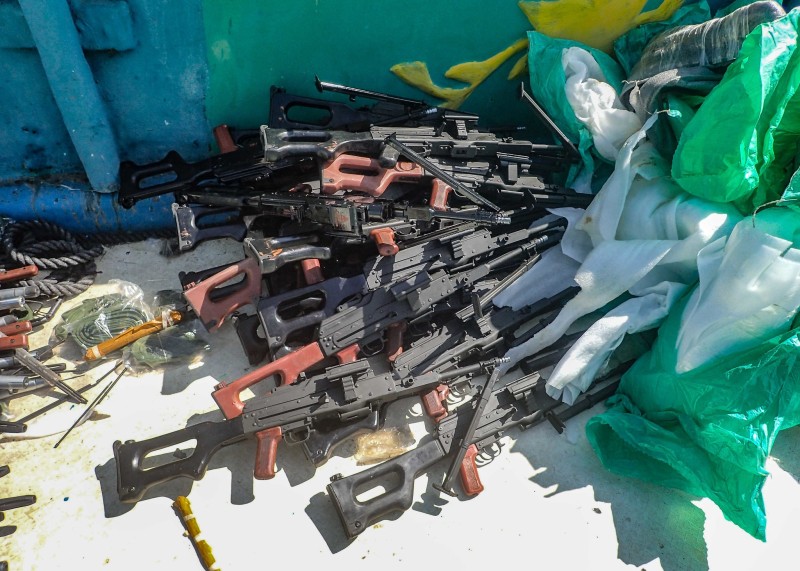
Sheinbaum also outlined plans to push for a constitutional amendment targeting foreign arms manufacturers and traffickers, noting that roughly 200,000 American-made firearms are smuggled into Mexico each year.
Earlier this month, she indicated that Mexico would intensify its ongoing lawsuit against U.S. gun makers, accusing them of complicity with terrorist groups if the designation were finalized. The lawsuit, initially filed in 2021, seeks $10 billion in damages from companies such as Smith & Wesson, Glock, Beretta, Barrett, and Sturm, Ruger, alleging they facilitate arms flows to drug cartels and fuel gun violence across Mexico.