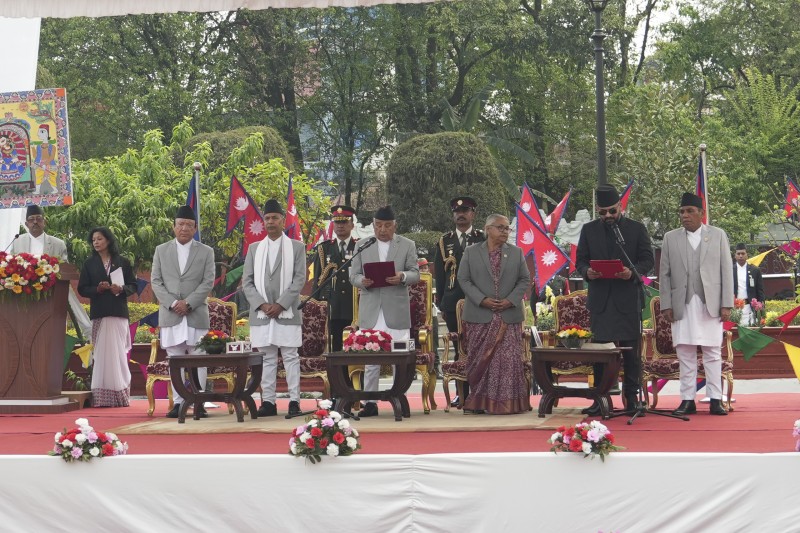
Nepal’s freshly inaugurated prime minister, Balendra Shah, a 35-year-old rapper and engineer, wasted no time in launching a push for legal action against his predecessors. Sworn in on Friday, he quickly directed his cabinet to act on a state report that calls for prosecuting former top officials over a brutal crackdown on youth-led demonstrations last year.
Shah’s Rastriya Swatantra Party secured a decisive victory in a snap election, riding a wave of public anger after mass protests by young people unseated the previous government. The new cabinet’s first move was to endorse the full implementation of a high-level commission’s findings, which recommend criminal charges against ex-Prime Minister K.P. Sharma Oli, former Home Minister Ramesh Lekhak, and ex-Police Chief Chandra Kuber Khapung.
Government spokesperson Sasmit Pokharel announced that agencies have been instructed to follow the recommendations immediately, with a special panel set to address disciplinary issues in security forces. The protests in September 2025, sparked by a ban on 26 social media platforms, left 76 dead and over 2,500 injured. The commission blamed the former leaders for “extreme reckless negligence,” saying they failed to intervene during a four-hour clash outside parliament, where security forces used excessive force.
If convicted, Oli and his aides could face up to 10 years in prison and fines. The unrest later spread, with arson attacks on key government buildings, though the commission noted criminal groups hijacked parts of the movement. It also criticized intelligence agencies for not monitoring digital planning of the riots.
Shah’s administration is framing this as part of a broader anti-corruption drive, promising to scrutinize officials’ assets and tackle graft dating back decades. Home Minister Sudhan Gurung vowed zero tolerance for bribery, telling officials to report any corruption.