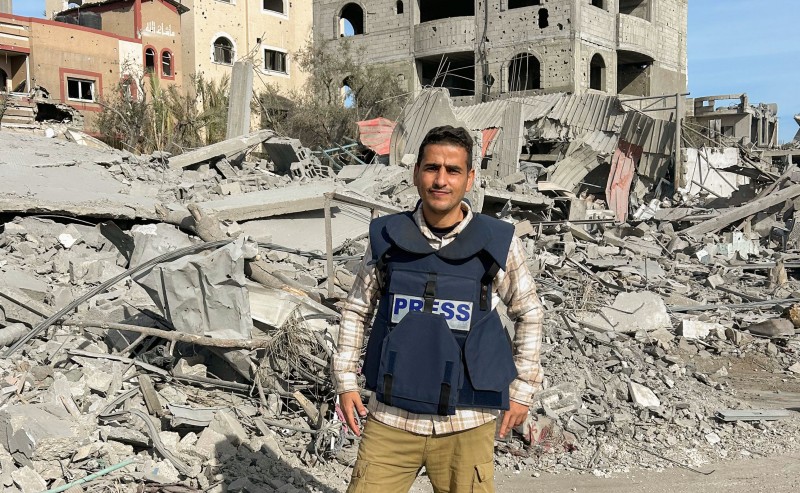
For more than a year, a Gaza-based journalist has carried on his reporting while coping with personal tragedy, constant displacement, and the basic struggle for survival. The journalist, who contributes to international outlets, has lost his home and many family members since the escalation of hostilities in October 2023.
After each funeral, he returns to the urgent tasks of finding food and clean water. Two of his young daughters were hurt when the walls of a makeshift shelter collapsed. One of them, a toddler, suffered facial wounds requiring stitches, and doctors say cosmetic surgery will be needed—if she can be evacuated.
He reports between funerals, under gunfire and bombs, often working on a borrowed laptop from a tent. His eyes frequently scan the sky for danger. Colleagues and friends have been killed while working; the press freedom community says nearly 200 media workers have died in the conflict.
After evacuation orders forced his family from their home in the southern city of Khan Younis, they fled with little more than a few belongings. He thought the move would be temporary. Weeks later, an airstrike destroyed the house, along with all his equipment, files, and family keepsakes. Since then, the family has moved repeatedly between so-called safe zones, living in ruins or tents near hospitals or farmland. No place has offered true safety.
In overcrowded Rafah, his family slept on the ground, surrounded by the sounds of shelling and crying children. Water and food became daily struggles. Markets sold only expensive canned goods; fresh produce disappeared. When his youngest daughter asked for an apple, he could only offer words.
Then came famine. His wife, once his strongest supporter, now begs him to stop. She fears for his life, worried their children will grow up without a father. But he says leaving journalism would mean abandoning his people and their stories.
Every morning, he puts on his press jacket and writes down his destination for his family, so they will know where to find his body if he doesn’t return. He walks miles each day to reach a spot with electricity and internet. On good days, he gets a ride from a car or cart.
His reporting covers the collapse of health care, the destruction of water and power networks, and the spread of disease and hunger. He has tried to give voice to victims, including prisoners used as human shields, doctors killed at work, and babies who died before birth. He says each bombing site raises the same question: Will I come back?
Despite immense personal loss, colleagues describe him as a resilient, balanced journalist who remains calm amid trauma. He has won awards for his work.
Since fighting intensified in April 2024, the family has moved again multiple times, eventually settling back in another tent. He tried to build a room from rubble, but that shelter also collapsed, injuring his daughters again. The family fled once more.
Now, they live in a camp in Al Mawasi. He continues to document the war’s impact, determined to ensure that the stories of the countless victims are not forgotten.