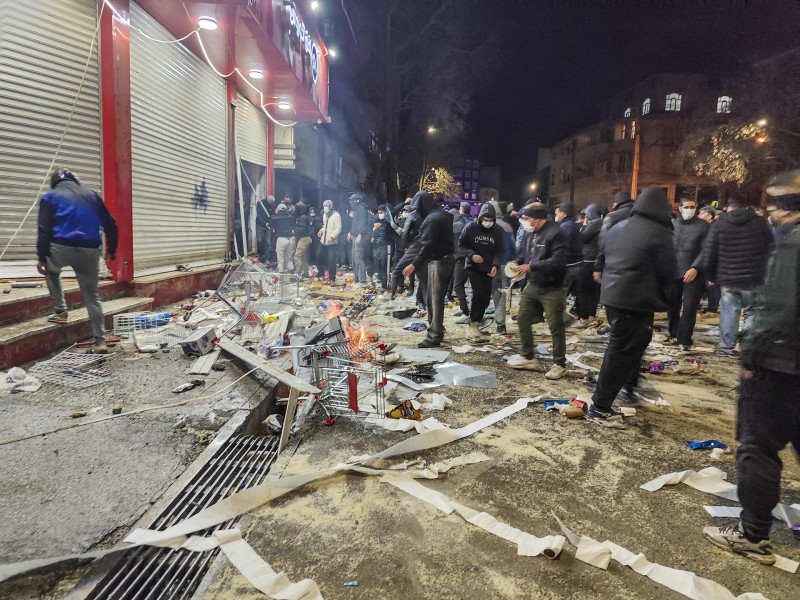
Unrest has erupted across Iran, with tens of thousands of people taking to the streets in cities and rural towns, fueled by economic despair and widespread anger. The demonstrations, which began late last month over soaring inflation and a collapsing currency, have escalated into violent confrontations and calls for the downfall of the ruling system.
Videos circulating online show burning buildings and vehicles in Tehran and other regions, alongside massive crowds demanding change. Human rights organizations report that at least 45 people, including eight children, have been killed by security forces since the protests began, with hundreds injured and over 2,000 arrested. Amnesty International and Human Rights Watch have confirmed the use of live ammunition by authorities, resulting in at least 28 deaths in early January.
Protesters from diverse backgrounds, including women, men, and the elderly, have joined the rallies. One participant from Tehran described how even quiet neighborhoods have mobilized, stating that “people are protesting against high prices and the incompetence of those in charge.” Another demonstrator called the movement a “last chance” to avert deepening crisis, though he acknowledged the high stakes.
The protests have spread beyond urban centers, reaching rural areas and traditional strongholds of the regime. The Grand Bazaar in Tehran, historically a bastion of religious and wealthy supporters, has shown signs of unrest, indicating a broader shift in public sentiment. Analysts attribute the upheaval to structural failures within the nation’s governance, labeling it a massive kleptocracy that has exhausted its capacity to address entrenched problems.
The government has responded with a nationwide internet shutdown, reducing connectivity to near zero, as reported by monitoring groups. Supreme Leader Ayatollah Ali Khamenei denounced the protests as vandalism orchestrated by foreign powers, while President Masoud Pezeshkian called for restraint in handling the demonstrations.
This wave of unrest marks the most significant challenge to the authority of the regime since the 2022 Women, Life, Freedom movement, though experts note key differences. The current protests have a broader geographic spread and appeal, drawing parallels with earlier uprisings in 2017 and 2019. International figures, including U.S. President Donald Trump, have weighed in, warning of severe consequences if a lethal crackdown continues.
The situation remains fluid, with communications severely disrupted, making independent verification of events difficult. The protests reflect a deepening crisis that touches on economy, governance, and social fabric, with no clear resolution in sight.