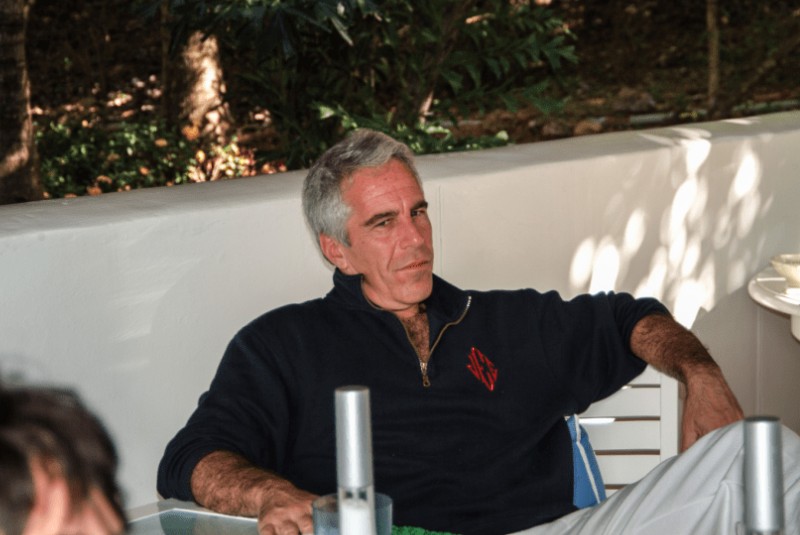
Newly released U.S. government emails reveal how the late financier Jeffrey Epstein leveraged his global connections to aid Karim Wade, the son of Senegal’s former president, following a high-profile corruption conviction.
The correspondence, made public by the U.S. Justice Department, traces a relationship that spanned several years, beginning in late 2010 and continuing through Wade’s imprisonment and eventual release. Wade, who served as a minister under his father Abdoulaye Wade’s administration from 2000 to 2012, was often referred to as the “minister of heaven and earth” due to his sweeping influence.
In September 2015, months after Wade received a six-year prison sentence for illicit enrichment, an intermediary named Elisabeth Feliho reached out to Epstein seeking assistance. “Total cost for 3 months would be 100,000 USD and they are ready to start today,” she wrote, requesting funds for a lobbying firm to pressure U.S. lawmakers and United Nations officials.
The documents show Epstein’s involvement began long before Wade’s legal troubles. The two men initially connected when Abdoulaye Wade was still in power, with Epstein arranging a Paris meeting in November 2010. By 2011, they were planning an African tour together, with Epstein joking about acquiring a Moroccan palace and Wade responding with crude humor about including a harem.
Following the elder Wade’s electoral defeat in 2012, the younger Wade sought Epstein’s business advice. The financier suggested creating a Special Purpose Acquisition Company, noting it would face less regulatory scrutiny than traditional public offerings. A related investment vehicle called “Project Pearl” was discussed, though the Justice Department did not release the full proposal.
While Wade awaited trial, Epstein received a $500,000 invoice from Wade’s legal team, billed to his consulting firm Southern Trust Company. After the conviction, the financier reached out to Thorbjorn Jagland, then head of the Council of Europe, about potentially filing a case with the European Court of Human Rights.
Pressure mounted on Senegal’s government through various channels. A U.S. lawyer involved in lobbying efforts informed Epstein in April 2016 that the American ambassador was “helping” behind the scenes. The Senegalese government ultimately pardoned Wade in June 2016, allowing him to depart for Qatar.
Following Wade’s release, Epstein attempted to arrange a meeting in Doha with former U.S. Treasury Secretary Larry Summers, dismissing Wade’s conviction as politically motivated. “He is the most charismatic and rational of all the africans,” Epstein wrote, praising his associate despite the corruption finding.