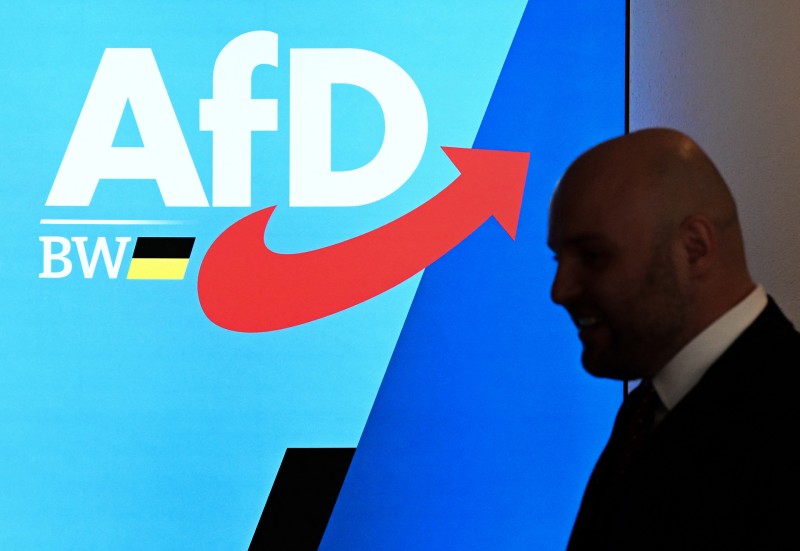
A twenty-member delegation from Germany’s far-right Alternative for Germany (AfD) party has ended a week-long visit to the United States, where it met with Republican lawmakers and officials to assert claims of political oppression back home.
Markus Frohnmaier, the head of the delegation from Baden-Württemberg, announced on social media that the mission in Washington was aimed at forging new alliances and bolstering the AfD’s standing. During the trip, European Parliament member Petr Bystron posted a video from the U.S. Capitol, declaring that opponents of the establishment were uniting across the Atlantic.
Bystron also published an article from a right-wing news site, claiming he discussed with Justice Department pardon attorney Ed Martin—described as a close Trump associate—what he termed the “systematic abuse of the judiciary to suppress political opposition in Germany.” The article alleged that the Trump administration had agreed to look into what it called “money laundering and corruption networks” within international NGOs in Europe, naming several groups without providing evidence. The White House declined to comment, and Martin, who posted a photo with Bystron, did not respond to inquiries.
Florida Republican Congresswoman Anna Paulina Luna described the meeting as “wonderful,” emphasizing the importance of allies in the European Union. Bystron has publicly targeted investigative organizations following reports that German prosecutors requested his immunity be lifted to look into claims he received payments from a Russian disinformation network. The European Parliament removed his immunity in April, enabling an investigation by the Munich Public Prosecutor’s Office into whether he supported Russian interests in exchange for payments from an online outlet later sanctioned for spreading disinformation.
Bystron denies all allegations, framing the probes as judicial harassment. A Munich court fined him 11,250 euros in October for sharing a montage depicting the banned Hitler salute, a ruling that is not yet final.
The AfD, now Germany’s second-largest parliamentary party, is known for its anti-immigration, Eurosceptic, and climate-skeptic positions, with growing appeal among young people. The party views investigations of its members as efforts to stifle opinion. Mainstream parties largely refuse coalitions with the AfD due to its extreme stances, and the domestic intelligence agency monitors it over concerns about threats to democratic order.
During the U.S. trip, Frohnmaier declared in New York that Germany’s establishment had “lost its mind,” turning the country into “a land of prosecutors and censors.” He accused the government of trying to ban his party, likening it to attempts to remove Donald Trump from ballots.