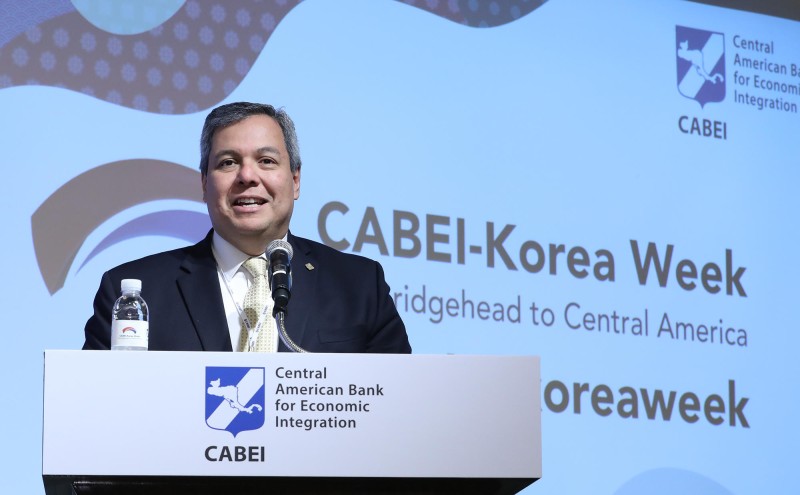
The Central American Bank for Economic Integration (CABEI) and its former president, Dante Mossi, have filed competing lawsuits, escalating a dispute over allegations of misconduct and transparency failures.
Last week, the development bank initiated legal proceedings against Mossi in a Washington, D.C., federal court, accusing him of launching a “relentless social media campaign” and making “unsubstantiated allegations of corruption.” This move came in response to a prior lawsuit filed by Mossi with the Nicaragua-based Central American Court of Justice, where he seeks nearly $2.4 million for reputational harm and lost future earnings.
Mossi contends that CABEI’s legal action is a tactic to shift focus from his own claims. He argued that the bank’s efforts to enhance its reputation have prioritized public relations over substantive transparency. “The bank’s accountability exercise has been good on the PR side, but totally missing on actual efforts to make information public,” he stated.
In March, CABEI announced it would review projects showing signs of irregularities, including those flagged in an investigation by OCCRP and partners that uncovered widespread corruption and due diligence failures during and before Mossi’s tenure.
The bank’s lawsuit, filed last Thursday, centers on alleged misconduct during Mossi’s leadership. Anne Champion, a lawyer representing CABEI, said in an email that the former president “engaged in a series of actions that violated the trust placed in him,” including attempts to interfere with key business relationships and misuse of bank resources for personal gain.
Specifically, the lawsuit accuses Mossi of using his position to promote a U.S.-based electric-vehicle company. It claims he hosted a CABEI event in Washington a year before leaving the bank in November 2023, encouraging investment in the firm. Additionally, shortly before his departure, Mossi allegedly “abused his discretion” by having the bank purchase two vehicles from the company with “little apparent business rationale.” The complaint also states he brokered a deal with a Honduran taxi business to buy electric vehicles from the same firm while still president.
Mossi responded that he formed his own company in April 2024, four months after leaving CABEI, and only then purchased vehicles from the American firm for shipment to Honduras. He denied any overlap with his tenure, saying, “That was after I was a private citizen, so I don’t know why they mix things.”
CABEI, sometimes called the “dictators’ bank” by critics, has faced scrutiny for providing billions of dollars to regional governments accused of authoritarianism, such as Nicaragua and El Salvador. Nicaraguan Finance Minister Bruno Gallardo Palaviccine, who serves as the country’s governor at CABEI, said in an open letter on Friday that he opposes the lawsuit against Mossi. He argued that such actions should have been consulted with member-country governors and directors, given their voting power, and noted that Mossi had “our full support during his term of office.”