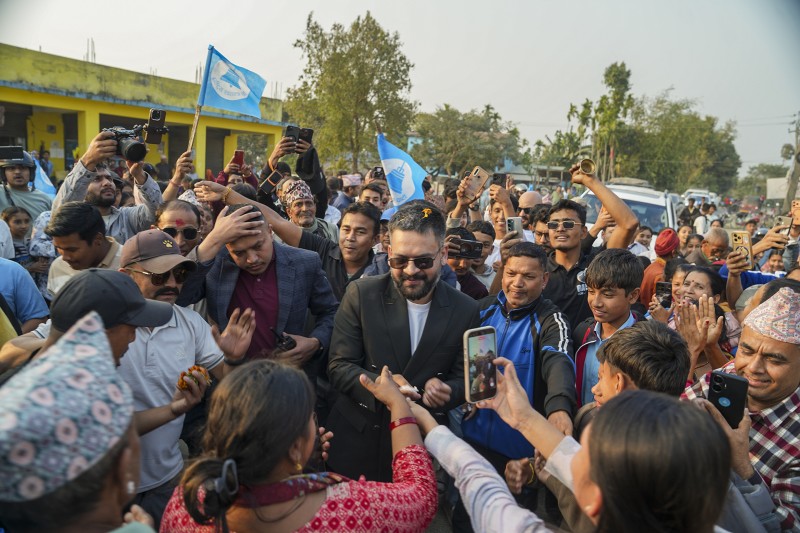
A 35-year-old former rapper and structural engineer has been declared the winner of Nepal’s general election, paving the way for him to become the country’s next Prime Minister.
The Election Commission’s final tally confirmed that Balendra Shah’s Rastriya Swotantra Party secured 182 out of 275 parliamentary seats, coming within two seats of a two-thirds supermajority. In a direct contest against former Prime Minister KP Sharma Oli in the Jhapa-5 constituency, Shah prevailed by a margin of nearly 50,000 votes.
The election results mark a dramatic shift in Nepal’s political landscape. Oli’s Communist Party of Nepal managed only 25 seats, while the Nepali Congress won 38. Smaller parties and an independent candidate split the remaining seats.
This vote came in the wake of the September 2025 collapse of the House of Representatives, triggered by widespread youth-led protests. Those demonstrations erupted after the government imposed a social media ban, fueled by public anger over corruption and mismanagement. The crackdown on protesters proved deadly, with over 2,000 injured and 77 killed, many by security forces. Buildings including the Supreme Court and parliament were set ablaze during the unrest.
Young activists who led the protests expressed cautious optimism. One leader noted that the election represented a reclaiming of democracy by a new generation, emphasizing that the fight against corruption resonates across all age groups.
Shah, who gained fame as a rapper and accumulated 3.7 million Facebook followers, built his campaign around an anti-corruption platform. He declared his intent to lead the charge against irregularities in parliament. Interestingly, he avoided media interviews throughout his campaign and after his victory, a pattern he established during his three-and-a-half-year tenure as Kathmandu’s mayor. His time as mayor drew criticism for bulldozing a squatter settlement and relying on a small circle of advisors, yet he captured national support when he publicly backed the youth protests.
The RSP’s election manifesto pledges transparent investigations into the assets of prominent officials since 1990, with illegally acquired wealth to be confiscated and nationalized. However, the party’s chairman, Rabi Lamichhane, who also won a seat, faces ongoing legal battles involving cooperative fraud, money laundering, and organized crime charges.
A commission investigating the deadly protest crackdown has submitted its report, though findings remain undisclosed. As the new government prepares to take office, protest survivors vow to monitor its commitment to meaningful anti-corruption measures. One individual, injured during the demonstrations, stated they would serve as external watchdogs to ensure the government delivers on good governance.