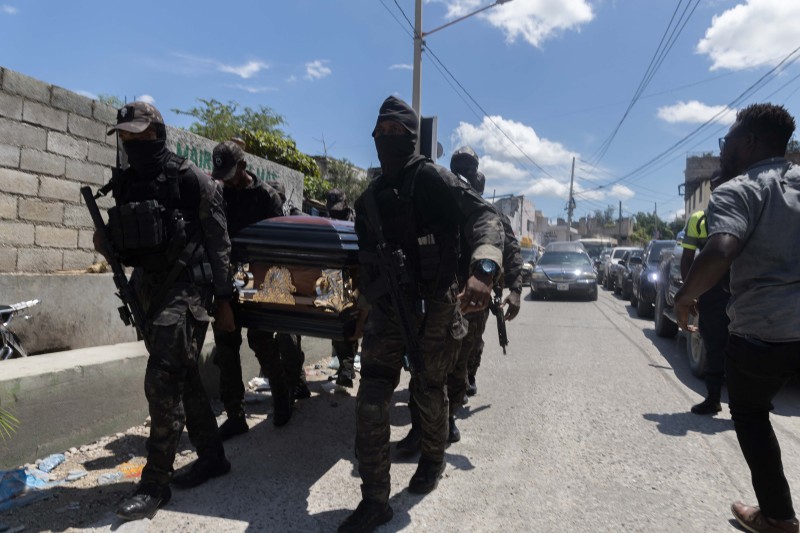
A newly deployed United Nations contingent has commenced operations in Haiti, accompanied by bold statements about its objective to “neutralize” heavily armed criminal syndicates that have terrorized the nation. Yet, skepticism lingers over whether this mission can succeed where its predecessor failed.
The Gang Suppression Force (GSF), as it is called, steps in after the previous Kenyan-led Multinational Security Support Mission struggled to curb escalating violence. That earlier effort, launched two years ago, was meant to bolster local police but saw gangs grow bolder, with death tolls climbing relentlessly.
Last year alone, over 5,600 people lost their lives, and armed groups now dominate an estimated 90 percent of Port-au-Prince, the capital. The situation has worsened this year, with gangs spreading into rural areas, forcing more than 1.3 million people from their homes. At least 3,100 murders were recorded in the first half of 2025, as the UN described the groups as “terrorizing civilians with kidnappings for ransom, rapes, and killings.”
The earlier mission suffered from chronic underfunding, never reaching its planned 2,500 international soldiers. The new GSF has a larger target of 5,550 troops, with a 12-month initial mandate to “neutralize gangs, secure infrastructure, and support humanitarian access,” according to the UN. But analysts point out that the GSF inherits many of the same obstacles.
“This looks like a rebranding,” noted Nathalye Cotrino of Human Rights Watch. Experts George A. Fauriol and Mary Speck highlighted in a recent analysis that while the GSF appears more robust on paper, it must still overcome the funding and personnel gaps that crippled its forerunner.
The UN itself has acknowledged the gradual buildup required to reach the mandated force size. “It will take time to assemble 5,500 security personnel and 50 civilian staff, and to establish the necessary support office,” the organization stated, adding that funding remains reliant on voluntary contributions from member states, with personnel commitments still unclear.
So far, the gangs seem unfazed by the new mission. Antonal Mortimé, co-director of a Port-au-Prince human rights group, reported that armed groups are growing more aggressive despite the announced deployment. “They continue to invade new zones and communes,” he said.
The GSF announced its first joint patrols with Haitian police and military last week, including a major operation to retake a road from the Gran-Griff gang. The mission described how gang members dug trenches and occupied buildings to launch Molotov cocktails in a bid to block supply routes to police stations.
International support for the GSF has included a $60 million contribution from Canada, while other governments and regional bodies have voiced backing. However, both Cotrino and Mortimé stressed the need for strict oversight to prevent abuses by soldiers, a recurring problem in past interventions.
Cotrino also urged a more holistic strategy beyond military action. “We’re not advocating for a purely ground-based force but for a comprehensive international response,” she said, emphasizing reintegration programs for former gang members, particularly minors forced into the groups. “The steps taken so far are insufficient, but they are a positive start.”