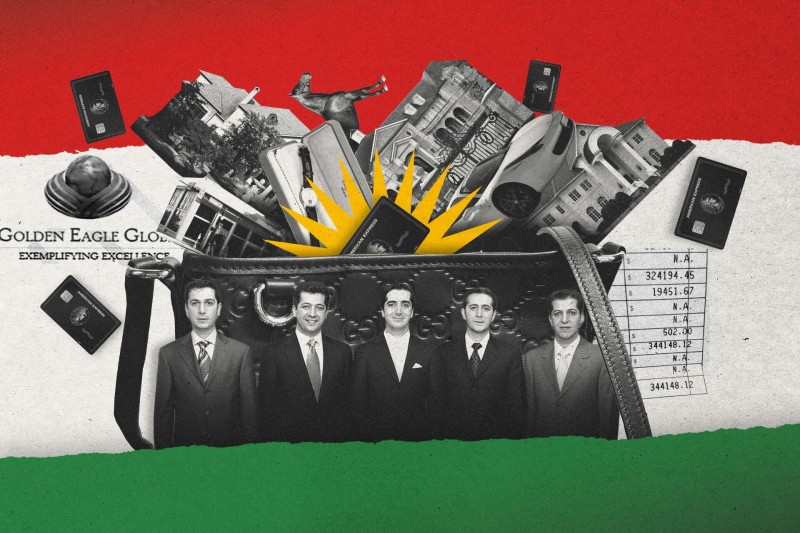
A comprehensive investigation has revealed that the five sons of Iraqi Kurdistan’s founding patriarch acquired over 30 properties across the United States worth more than $100 million, while using complex corporate structures to conceal their ownership.
The Barzani brothers—Masrour, Mustafa, Mansour, Waysi, and Muksi—purchased mansions, commercial buildings, and farmland between 2005 and 2019, according to leaked documents and financial records. Masrour Barzani currently serves as prime minister of the semi-autonomous Kurdish region, while his brothers hold or have held senior government positions.
Hidden Ownership Through Offshore Companies
To keep their names off public records, the brothers created companies in the British Virgin Islands named after characters from the “Pirates of the Caribbean” films. These offshore entities then owned U.S. corporations, mostly registered in Delaware and Virginia, which held property deeds.
Mustafa Barzani purchased a $5.6 million mansion known as Casa Divina in a Washington, D.C. suburb in 2013, spending an additional $500,000 on art and furniture. He sold the property in 2022 for $6.25 million.
The most prolific buyer was Muksi Barzani, who accumulated nearly $60 million in real estate. Despite not holding an official government role, leaked communications show concerns about revealing his family connections to lenders conducting anti-money laundering checks.
Funding Sources Under Scrutiny
Financial documents indicate that at least $29 million of the brothers’ spending originated from two Kurdish conglomerates: Golden Eagle Global (GEG) and Ster Group. While neither company has publicly acknowledged ties to the Barzanis, leaked agreements suggest Mustafa Barzani controlled GEG through nominee shareholders.
A U.S.-registered company called GEGI Management was created specifically to maintain an administrative bank account receiving family funds. Internal memos describe it as “a vehicle for paying out family expenses,” covering everything from hospital bills to designer clothing and jewelry.
Ster Group transferred over $18 million to fund property purchases and personal expenses, including a $340,000 Ferrari and luxury crystal decorative objects.
Conflict of Interest Questions
Anti-corruption specialists say the financial arrangements blur the line between public service and private wealth. The average monthly income in Iraqi Kurdistan is approximately $500, highlighting the disparity between the ruling family’s spending and ordinary citizens’ lives.
Masrour Barzani’s lawyers stated he “vehemently rejects” any wrongdoing and noted that owning property abroad is not unlawful for wealthy individuals seeking privacy protection.
The investigation raises questions about whether the brothers violated Iraqi conflict-of-interest disclosure requirements, though enforcement of such rules has historically been limited.