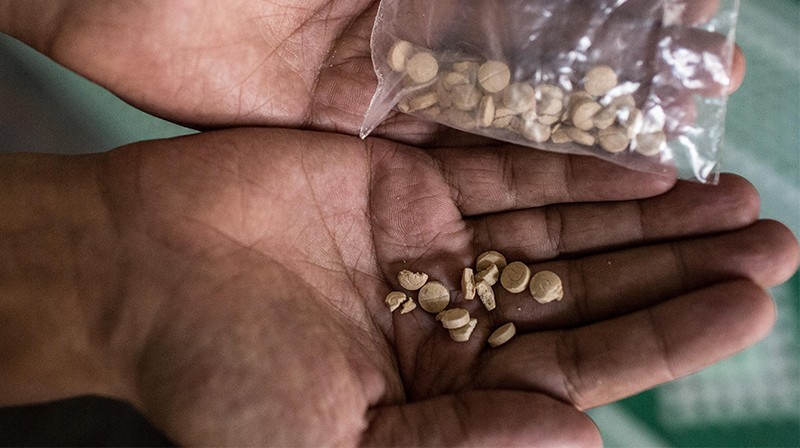
Iraqi border security units have intercepted a large shipment of Captagon pills near the Syrian frontier, seizing 400,000 tablets concealed in plastic containers during a nighttime operation, authorities confirmed.
Using advanced thermal imaging technology, border guards detected the illicit cargo being transported across the Euphrates River from Syria on Monday. While no arrests were made, officials stated that standard legal procedures had been initiated and the confiscated narcotics were handed over to investigative agencies.
This interception is part of a growing trend of major drug busts along Iraq’s western border. Just last week, forces recovered 30,000 tablets in the same region, and in a prior operation, authorities captured a record 1.1 metric tons of Captagon moving from Syria through Turkey.
Iraq has become a critical transit point for drug trafficking, with the United Nations Office on Drugs and Crime reporting that authorities seized over 24 million Captagon pills in 2023 alone—estimated to be worth up to $144 million. The UNODC also noted that approximately 82% of Captagon intercepted across the Middle East last year originated in Syria, with an additional 17% coming from Lebanon.
The amphetamine-based stimulant has thrived under the Assad regime, emerging as Syria’s primary export during its prolonged civil conflict. Although enforcement has increased following Assad’s ouster, production and smuggling operations continue to persist.
Iraq’s geographic position places it at the heart of an expansive drug trafficking network linking Southwest Asia, Africa, and Europe. Beyond the Captagon flow from Syria, Iraqi authorities are grappling with smuggling activities connected to Iran, where raw materials are believed to be sourced before being processed in local or regional laboratories and trafficked to Gulf states.
Anti-drug campaigner Mohammed al-Yasiri highlighted growing concerns about Iraq’s eastern border, where authorities are striving to curb the surge of narcotics overwhelming the region.