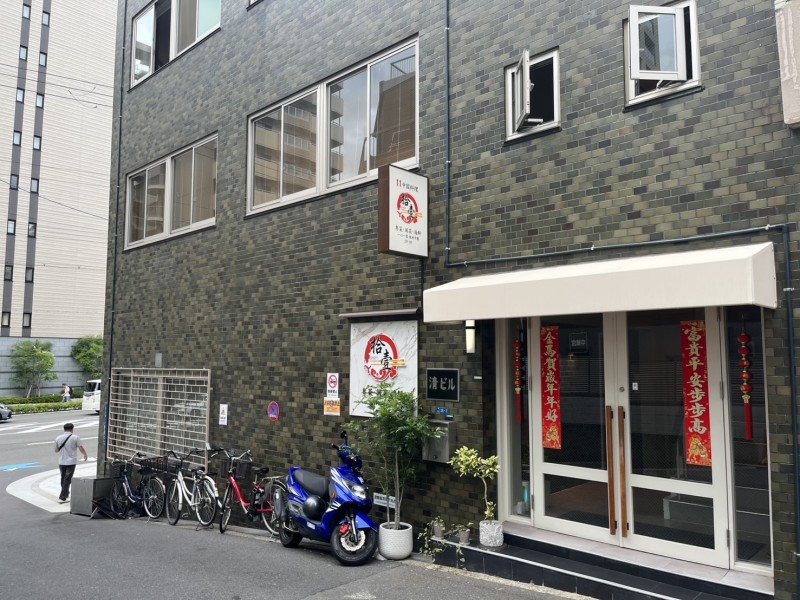
A Chinese businessman facing an arrest warrant at home for alleged illegal gambling has made Japan his base, residing in Osaka for the last two years while operating a travel firm and holding local property. This comes as British authorities have frozen over $100 million of his real estate in London.
Records from land and corporate registries indicate that the man, Su Jiangbo, acquired a personal residence in an Osaka suburb in 2024 and also serves as director of a local tourism and real estate company that owns an additional property.
In correspondence, Su confirmed his move to Japan, citing the nation’s “political and economic stability” and “welcoming society” as key factors for his relocation, which he said supports his long-term business ambitions.
In the United Kingdom, the Crown Prosecution Service had obtained freezing orders on 85 of his London properties earlier this year, initially referring to him only by a pseudonym. Investigative reports later identified him and detailed how he acquired the assets using a citizenship-by-investment program from the Caribbean nation of St. Kitts and Nevis.
While no charges have been filed against him in the UK, Su has contested the asset freeze, asserting that all funds used for the purchases came from legitimate sources with full documentation. He refrained from providing further specifics, citing the need to maintain procedural fairness.
Back in China, Su is listed among 38 wanted individuals by a county public security bureau in Fujian province, with the notice alleging his involvement in casino operations. Gambling is prohibited in mainland China, except for the special region of Macau.
Su has vehemently denied any criminal wrongdoing, describing the allegations as baseless. He stated that his lawyers are handling the matter and that he cannot elaborate on what he calls unfounded claims.
A business associate, Hu Xiaowei, who previously used Su’s company address in Japan, has been sanctioned by the United States. U.S. authorities have linked Hu to a Cambodian conglomerate accused of running large-scale cyber-scam schemes, though Su denied any connection to that group, calling the association a personal favor to allow a friend without a fixed address in Osaka to use his location.
Su began buying London real estate shortly before his name appeared on the Chinese wanted list and continued acquiring properties through mid-2025. His portfolio includes a penthouse valued at $13 million with landmarks such as St. Paul’s Cathedral and the River Thames in view.
Dismissing the significance of the Chinese warrant, Su pointed out that the reward offered for information leading to his capture was a modest sum equivalent to roughly $137. He accused Chinese authorities of employing a tactic known as “distant water fishing,” which he claims involves using legal processes to pressure wealthy individuals into paying ransoms. Human rights organizations have similarly described this practice, noting it often targets entrepreneurs from wealthier regions. Su maintains his business success drew unwanted attention from local officials seeking financial gain.