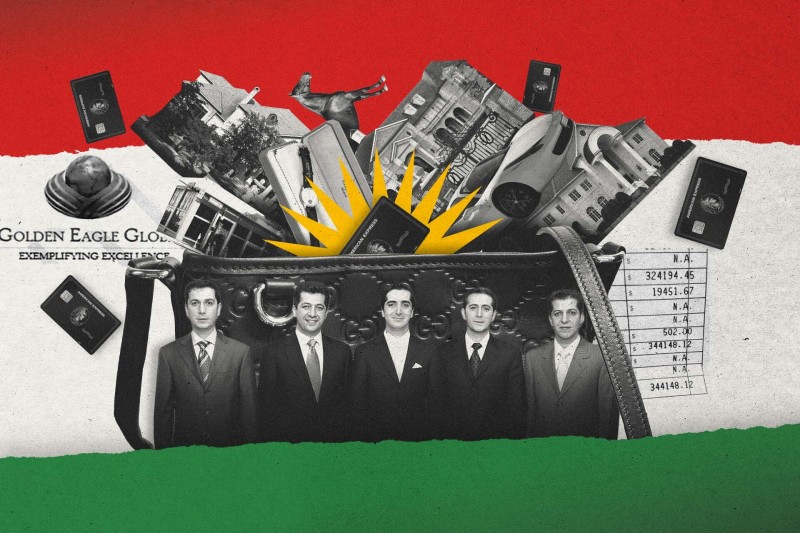
The sons of Iraqi Kurdistan’s founding leader acquired dozens of American properties and spent millions on luxury goods, according to leaked documents reviewed by investigative reporters.
Between 2005 and 2019, the five Barzani brothers purchased 31 properties across the United States valued at over $100 million, including mansions and commercial real estate. Credit card records show they bought designer items in New York, Paris, Zurich and Dubai, including a Ferrari and $50,000 in watches.
The spending stands in stark contrast to conditions in their homeland, where per capita income hovers around $500 monthly.
Hidden Ownership Networks
The brothers used a complex structure of offshore companies to shield their identities. Lawyers established corporations in the British Virgin Islands named after “Pirates of the Caribbean” characters, which then owned US-based firms that held property deeds.
Mustafa Barzani, the youngest brother, controlled a conglomerate called Golden Eagle Global that helped finance the family’s American lifestyle. The company’s US bank account paid for everything from hospital bills to designer handbags and luxury credit card charges.
Internal documents showed one brother’s lawyer worried that revealing family connections would trigger anti-money laundering scrutiny, writing: “We will be truthful, but we don’t want to send them scurrying down the path of a full-blown investigation.”
Business Ties Questioned
Leaked records indicate Golden Eagle Global acted as an intermediary for foreign companies seeking government approvals in Iraqi Kurdistan. Draft contracts showed the firm offered to obtain official permits using its “contacts and connections” rather than investing its own money.
Another Kurdish conglomerate, Ster Group, transferred over $18 million to fund the brothers’ US properties and expenses. One executive described Ster as “Masrour Barzani’s overseas company” in a 2008 email.
The prime minister’s lawyers said he “vehemently rejects” any wrongdoing, calling property ownership abroad “neither uncommon nor unreasonable for wealthy, high profile individuals.” They pointed to anti-corruption initiatives he announced last year.
Of the 31 properties acquired, 13 have been sold. The remaining 18 are still held by the companies that purchased them, with current ownership unclear.