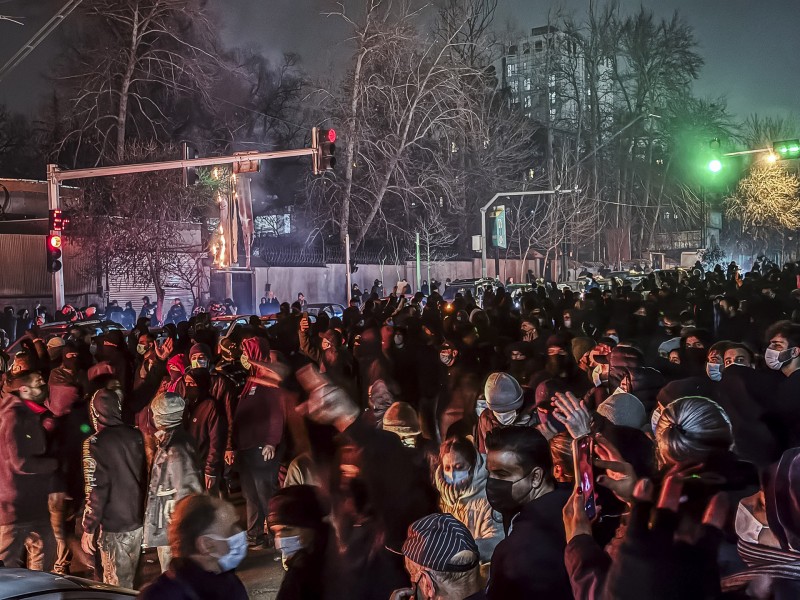
A prominent human rights organization has sounded the alarm over what it describes as a coordinated wave of arbitrary detentions in Iran, accusing authorities of using mass arrests to instill fear and suppress dissent since late December.
According to a report released Tuesday, security forces—including the Islamic Revolutionary Guard Corps—have detained tens of thousands of individuals in a campaign characterized by violence and intimidation. The group described this as a systematic effort to crush any opposition and hide ongoing abuses, citing video evidence of forceful arrests and testimonies from families of those missing.
The unrest began in late December after a dramatic drop in the value of Iran’s currency and soaring inflation, with protests erupting first in Tehran before spreading across the country. Government forces responded with lethal force, using live ammunition that resulted in at least 28 deaths between December 31 and January 3, according to separate human rights reports.
“The entire nation remains in a state of shock and grief, with families still searching for loved ones after the massacres of early January. Meanwhile, authorities continue to terrorize the population. Arrests persist, and detainees face torture, forced confessions, and secret executions,” said a senior researcher for the rights group.
The intelligence wing of the Revolutionary Guards reported on January 26 that at least 11,000 people had been summoned by security forces. By February 17, over 10,500 individuals had been referred for prosecution, and more than 8,800 indictments had been issued, according to a judiciary spokesman.
The report also highlighted the broadcasting of hundreds of coerced confessions by state media, including from children, in violation of international bans on torture and fair trial guarantees. Historically, such confessions have been used to justify death sentences and extrajudicial executions.
At least 30 detainees, including minors, now face the death penalty, with authorities labeling them as “mohareb”—a charge punishable by execution—in an attempt to sway public sentiment.
“Systematic impunity has enabled Iranian authorities to repeatedly commit crimes under international law,” the researcher noted.
Last week, a panel of UN experts urged Iranian officials to disclose the fate of all those detained or missing after the protests, warning that the full scope of the crackdown remains unclear. “The gap between official figures and grassroots reports only adds to the pain of families searching for their loved ones and shows a profound disregard for human rights,” the experts said.