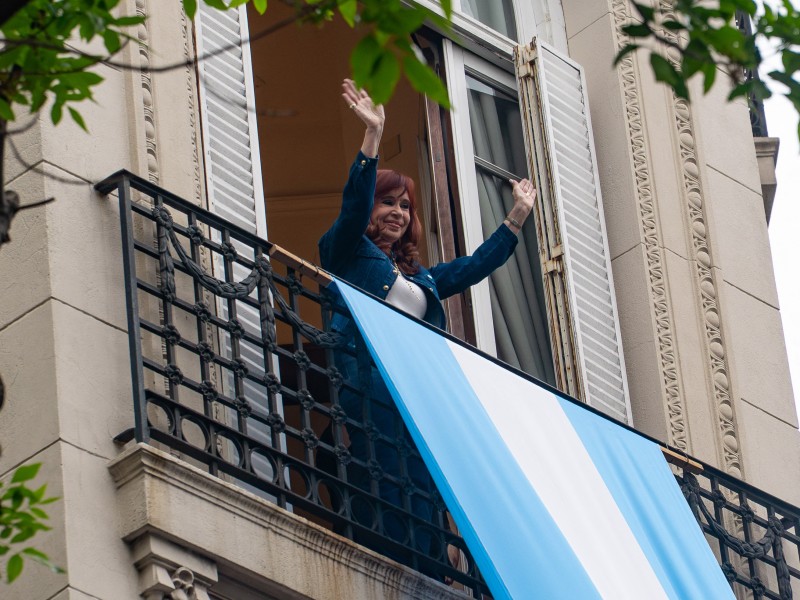
A sprawling corruption case has opened in Buenos Aires, placing former President Cristina Fernández de Kirchner and nearly 90 co-defendants before a federal court Thursday. The trial centers on allegations of a systemic bribery scheme linked to public infrastructure projects.
Prosecutors contend that an entrenched network within the government demanded and accepted payments from construction companies during the administrations of Néstor Kirchner from 2003 to 2007 and his successor, Fernández de Kirchner, who held office from 2007 to 2015. The charges specify that at least 200 cash deliveries occurred between 2009 and 2011.
The case stems from eight handwritten notebooks kept by Oscar Centeno, a driver for Roberto Baratta, who was the top assistant to former Planning Minister Julio De Vido. These records purportedly track dates, addresses, sums, and the identities of officials and brokers involved in transporting bags of currency.
The scandal broke into public view in August 2018 when Centeno’s notebooks were given to reporters at La Nación. Journalists verified key entries and figures before handing duplicates to judicial authorities.
Lead prosecutor Fabiana León has underscored the case’s magnitude, involving dozens of current and former public officials, executives from major contracting firms, and hundreds of anticipated witnesses. Proceedings may extend for up to two years.
Fernández de Kirchner, accused of orchestrating the alleged criminal organization, is already serving a six-year sentence under house arrest from a separate public works case dubbed Vialidad. A conviction in this notebook trial could extend her imprisonment.
Her defense has moved to dismiss the charges, presenting expert analyses claiming Centeno’s records were tampered with and arguing that cooperating executives were coerced into testifying.
The former president has consistently portrayed the prosecution as politically driven. Following a June 2025 Supreme Court decision against her, she told followers, “They’re three puppets answering to those ruling far above them. It’s not the opposition. It’s the concentrated economic power of Argentina’s government.” She later repeated this accusation on social media.
Among business figures set to testify are Juan Carlos De Goycoechea, former head of construction firm Isolux, who turned himself in and acknowledged funneling payments to Kirchnerist campaigns; Ángelo Calcaterra, a relative of ex-President Mauricio Macri, who confessed to bribery and became a cooperating witness; and Jorge Guillermo Neira of Electroingeniería, who was freed after admitting to financing electoral efforts.
Political defendants include former Planning Minister De Vido, his aide Baratta, and ex-Cabinet chief Juan Manuel Abal Medina, who has stated Baratta gathered business contributions for the 2013 legislative race. Centeno has been accepted as a cooperating witness and is under protection.
In reaction to the same court ruling, President Javier Milei posted on social media: “Justice. End. PS: The Republic is functioning, and all the corrupt journalists, accomplices of lying politician$, have been exposed in their operetta$ about the supposed pact of impunity.”