Authorities in Brazil’s Mato Grosso state have reported a sharp rise in deforestation driven by sophisticated criminal organizations, marking a shift from past practices dominated by individual offenders.
The state’s environmental secretariat noted that illegal logging in protected zones jumped 85% between August 2023 and July 2024, compared to the previous 12-month period, according to data from the Instituto Centro de Vida (ICV), an independent environmental group.
“Today, we see organized crime groups equipped with logistics, funding, and even weaponry operating in remote and sensitive areas,” the secretariat stated, contrasting this with earlier patterns of deforestation carried out by small-scale actors.
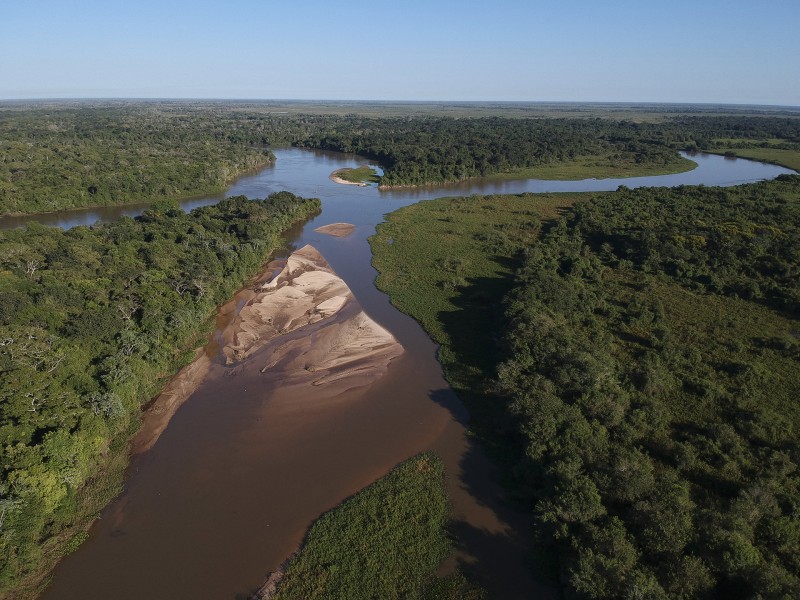
Mato Grosso, a western state bordering Bolivia, is largely covered by Amazon rainforest, where logging is banned across vast stretches, including indigenous territories. During the year studied, nearly 49,000 hectares were cleared illegally, with 17,800 hectares falling within protected indigenous lands.
Ewésh Yawalapiti Waura, leader of the Xingu Indigenous Land Association, described the situation as dire, noting that deforestation has worsened over the past six years. His group has recorded 700 unauthorized clearings in the Xingu territory, home to 7,000 people from 16 ethnic groups spread over 2.8 million hectares.
“Everything is ruined now. Our rivers are dying, and even some indigenous people are involved, causing conflict among us,” he said.
While more than half of illegal logging occurred on private land still subject to bans, such activity there hit its lowest level since ICV began tracking in 2013. Vinícius Silgueiro, ICV’s intelligence coordinator, attributed this to a scarcity of available forests on private properties, forcing pressure onto protected areas where timber remains.
Other protected zones, called conservation units, lost 4,677 hectares during the period, accounting for 10% of all unauthorized logging. The Guariba/Roosevelt Extractive Reserve alone saw 1,800 hectares destroyed.
Raimunda Rodrigues, a 58-year-old resident of that reserve, said her community of 70 families struggles to harvest rubber, Brazil nuts, and Copaiba oil, a traditional medicinal and industrial resource. “This land was once abundant with fruits, fish, and animals. Now, there’s nothing left. Catching a single fish requires immense effort,” she lamented.
The state environmental secretariat reported increased funding to combat these crimes, rising from 32 million reais ($5.8 million) in 2020 to 125 million reais ($22.9 million) in 2025, as authorities work to strengthen enforcement efforts.