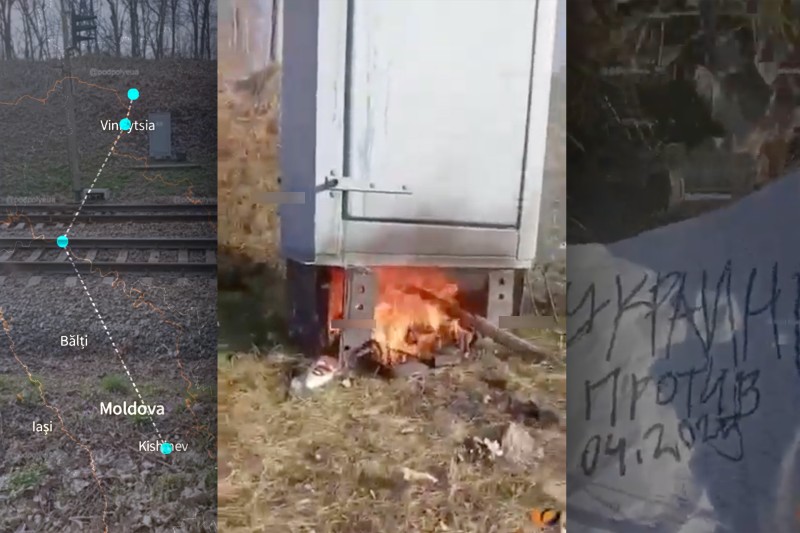
A 26-year-old man from Moldova set fire to a railway equipment cabinet in central Ukraine last April, following instructions from a handler on Telegram. The task, which paid about $300, was meant to damage railway controls, but the real goal was to create propaganda for a nonexistent pro-Moscow resistance movement, according to Ukrainian authorities.
The man, Victor Gherus, and his accomplice, Iurie Lupu, were caught within two days and sentenced to 10 years in prison in February. Court documents show they were motivated by money, not ideology. Gherus admitted he did not realize the act was linked to the conflict until he was told to hold a sign reading “Ukraine Against” in Russian.
Ukrainian prosecutors say 18 other foreigners have been convicted of similar acts since 2024, alongside hundreds of locals. Security officials suspect the operations are orchestrated by Russian intelligence, though direct evidence is hard to find. The saboteurs are often recruited from vulnerable groups—people with drug issues, addiction problems, or financial desperation—via messaging apps like Telegram.
Kostiantyn Gozdup, a prosecutor in Vinnytsia, said the narrative of an anti-government underground was planted early in the war to justify Russian actions. But experts find no evidence of a coordinated resistance. Liubov Tsybulska, an adviser on hybrid threats, described the attacks as sporadic and driven by cash, calling them a bid to “create a rift between the people and the leadership.”
Moldova, a poor neighbor, has been a fertile recruitment ground. Recruiters target individuals like Gherus, who had a drug conviction and struggled to find work after prison. His mother said he was timid and had been sent to Ukraine hoping to earn money rebuilding homes. Lupu, also a Moldovan with a criminal record, suffered from epilepsy and couldn’t keep a job.
The operations are designed to look like local protests, but the handlers and payments—often in cryptocurrency—point to a structured campaign. Telegram said it removes recruitment attempts for sabotage. The Kremlin did not comment.
Gherus, now serving time, said he regrets his actions. “I would do anything to start my life completely from scratch,” he told reporters.