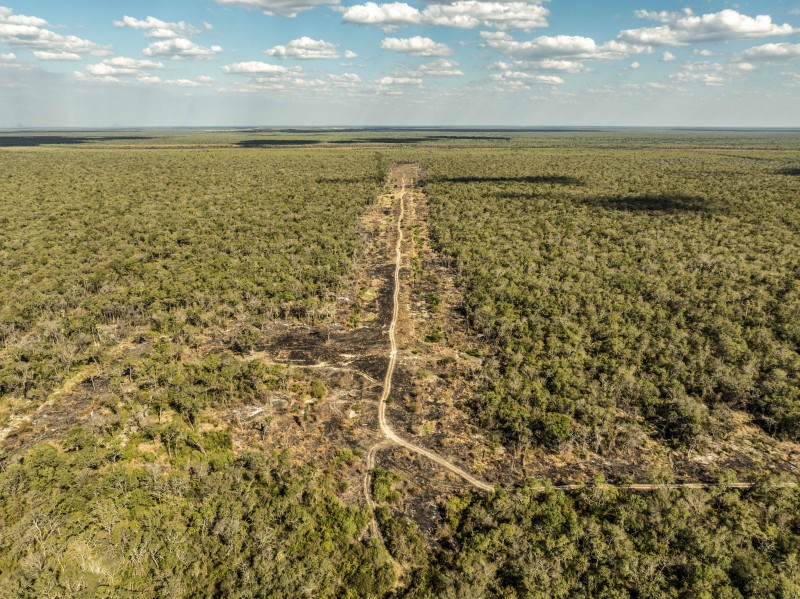
Deep in the vast, unforgiving forests of northern Paraguay, a team set out to uncover one of the most elusive tools of the drug trade: a secret airstrip carved into the wilderness. The journey through the Chaco region was grueling—muddy roads, scraping branches, and hours without a sign of human life. But signs of activity soon emerged: discarded shoes, empty bottles, and a makeshift camp with a motorcycle ready for a quick escape.
The search led to a massive clearing, stretching over 1,000 meters in length, hidden in the dense greenery. From above, the evidence was clear: recent burns to clear landing zones, fresh tire tracks, and small roads connecting the site. This was no forgotten relic—it was an active runway, built for moving large quantities of cocaine.
The Chaco’s extreme heat, sparse population, and lack of water make it a harsh place for people, but ideal for criminals looking to avoid detection. Until recently, Paraguay lacked radar systems capable of tracking the low-flying planes favored by smugglers. Authorities have destroyed 10 such runways in recent years, but traffickers quickly rebuild or repair them, knowing the state rarely inspects the area.
The location is strategic. Planes often arrive from Bolivia, the world’s third-largest coca producer, dropping off drugs before refueling and departing. From there, cocaine travels east to Brazil or south to river ports near the capital, feeding a booming European market. Gangs operating these routes include Brazilian mafia figures and a Uruguayan fugitive on the U.S. most-wanted list.
The specific airstrip discovered had been raided years ago, with agents seizing nearly 500 kilos of cocaine, weapons, and lighting equipment. Yet when the team visited, it appeared fully operational. A pilot familiar with such sites described it as “five-star,” noting it could handle planes used by traffickers.
The land has a complicated history. Once owned by an Argentine tycoon who built a tannin factory, it was later sold to a South Korean religious group. Today, a reforestation company has reported 10 clandestine runways to authorities but says only one received a response. Locals, including indigenous tribes and Mennonite settlers, live in fear. One ranch foreman was brutally beaten by armed men posing as officials, and no one reported it.
“It’s better not to talk about these things,” a guide explained, capturing the silence that helps crime thrive in this wild, isolated expanse.