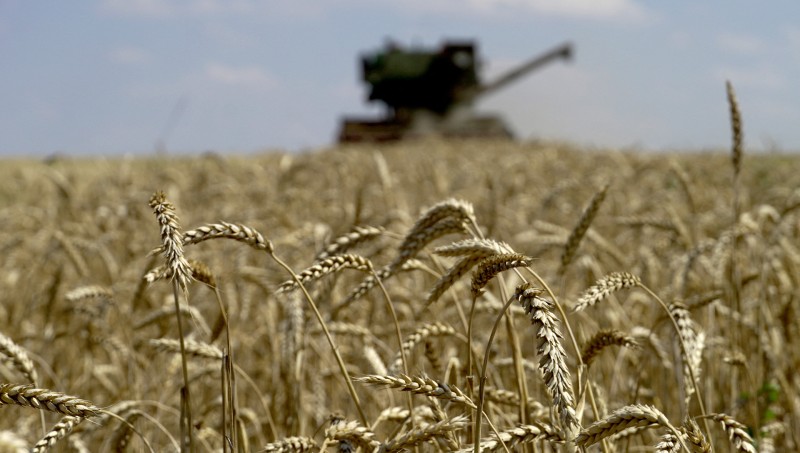
A family duo operating a sanctioned Russian drone producer is also running a grain export business that ships wheat from territories seized during the invasion of Ukraine, according to a new investigation.
The relatives—Roman Gurov, 41, and his mother Lyudmila Gurova, 75—are behind Nika LLC, a firm that has exported tens of thousands of tons of wheat grown near Mariupol, the port city that fell to Russian forces after a prolonged siege in 2022. Ukrainian authorities have long condemned such shipments as looting, deeming them a violation of international law, with estimated losses reaching billions of dollars.
Investigative reporters found that Nika supplies grain primarily to Turkey and Egypt. Much of it was traced to a Turkish miller, Erisler Gida Sanayi Ve Ticaret A.S., which also provides noodles to Ukraine. The documents reviewed—including declarations of conformity and shipping manifests—show that Nika’s production sites are located in Mariupol, with shipments routed through the Russian port of Temryuk.
The Gurovs did not respond to requests for comment. Erisler stated that it adheres to all relevant laws and sanctions, emphasizing that its vendors undergo rigorous screening.
Turkey has faced similar accusations previously. In 2022, Kyiv’s then-ambassador to Ankara accused Russia of exporting stolen Ukrainian grain through Crimea, prompting Turkey’s foreign minister at the time to pledge no tolerance for illegal trade.
The Gurov family’s involvement in drone manufacturing came to light only recently. Roman Gurov and his company Roboavia, which produces the Sarych reconnaissance drone and the Surprise strike drone, were sanctioned by the United States and Ukraine in 2024. The company was registered in 2015, with Lyudmila Gurova taking ownership in July 2022, just months after the invasion began.
No prior background in drone or grain operations appears in corporate records for either relative before 2020. Yet their grain exports surged dramatically—from $3.7 million worth in 2023 to $12.9 million the following year, with an additional 4,500 tons shipped in early 2025.