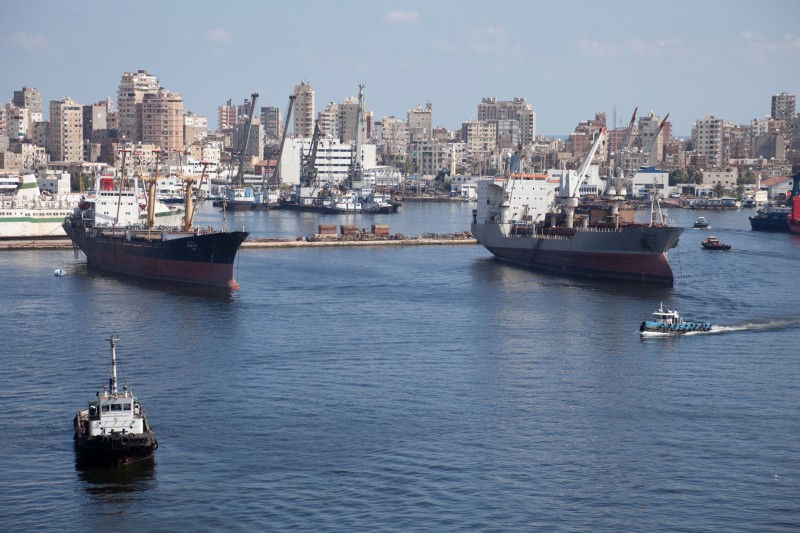
A Russian firm previously known for moving wheat from regions of Ukraine under Moscow’s control recently completed a delivery to Egypt, documents indicate.
Pallada LLC, the exporting company, shipped over 20,000 metric tons of wheat that arrived in Alexandria last month. The cargo’s original destination was Syria, but it was rerouted after the change in government in Damascus.
According to documentation secured by investigators, Pallada obtained modest amounts of wheat from occupied areas of the Zaporizhzhia region in the two months preceding the shipment. Whether that specific grain formed part of the Egyptian delivery could not be determined.
The vessel, the Mikhail Nenashev, departed from an undetermined location. Its tracking system was disabled at several points during the journey. It appeared in the Black Sea on November 29 heading for Istanbul. Following the political shift in Syria on December 8, the ship lingered near Cyprus for roughly three weeks before docking in Alexandria on December 30.
Egyptian state records show the cargo was consigned to “Minister of Defense/Future of Egypt,” a military entity that recently became the country’s primary wheat buyer. The recorded weight was 24,290 tons, about 3,000 tons less than what the Russian certificate listed. The cargo’s approximate market value based on December global prices was $6.7 million.
Pallada was established in August 2022 and is largely owned by Sergey Kuznetsov, a businessman with no publicly known prior involvement in grain trading. Export permits from Russian-installed authorities in occupied Ukrainian territory show the company received approval to move significant quantities of wheat, barley, and meslin in 2023.
Quarantine certificates from the Zaporizhzhia region indicate Pallada secured three wheat batches totaling around 126 tons in September and October before the vessel sailed. It remains unclear whether any of that stock was part of the Egyptian shipment.
The Mikhail Nenashev previously attracted attention. U.S. officials flagged it in 2022 as possibly involved in moving grain from occupied areas. Kyiv had also requested Turkish assistance in investigating the vessel and others operated by the same Russian company.
The Ukrainian government has long warned buyers about grain originating from occupied territories. In 2022, Ukraine thanked Egypt for turning away a ship it believed carried such cargo.
Tracking the precise origin of grain shipments remains challenging. Cargo from multiple sources is commonly combined, making verification difficult without advanced testing. The United Kingdom recently announced a new verification program using scientific methods to identify where grain was grown.
A Ukrainian presidential advisor noted that while Syria under the previous regime purchased such grain due to its ties with Moscow, the new Syrian government lacks those connections. He said the vessel’s history, route irregularities, and document gaps should prompt Egyptian authorities to examine the cargo more closely.
Representatives for Pallada, the Egyptian purchasing agency, and Russian port officials did not respond to requests for comment.