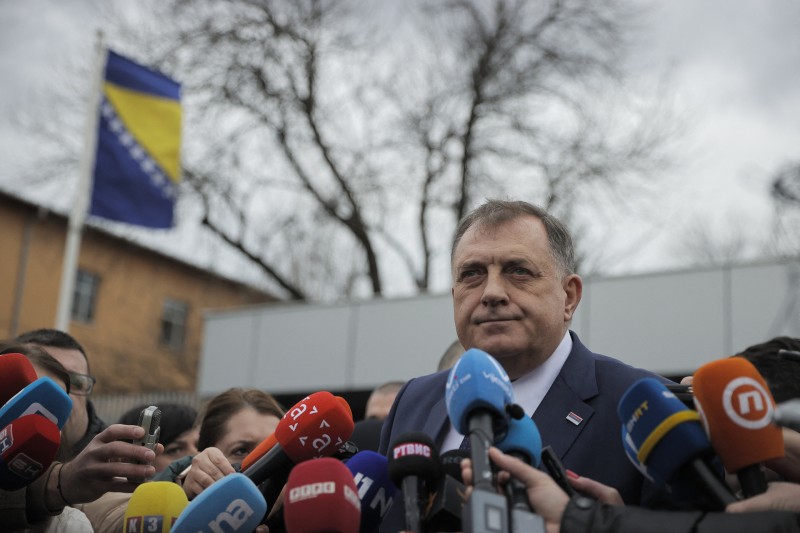
A major lobbying operation funded by separatist authorities in Bosnia’s Serb-controlled region has been uncovered, revealing a multi-million dollar campaign that specifically targeted a top international diplomat responsible for maintaining peace in the country.
Documents filed under US law show that Republika Srpska, the predominantly Serb territory within Bosnia, funneled at least $8.9 million to a dozen Washington-based lobbying firms over the past two years. The goal was clear: reshape international perceptions and advance secessionist ambitions.
The campaign zeroed in on Christian Schmidt, the German diplomat who served as High Representative for Bosnia until his surprise resignation this week. Schmidt had repeatedly clashed with Milorad Dodik, the region’s former president and still its most powerful political figure, whose separatist policies Schmidt actively blocked.
A lobbying contract signed in early 2025 explicitly listed Schmidt’s removal as a priority objective. The same contract, filed with the US Justice Department, stated that full independence for Republika Srpska remains “the ultimate goal.”
Dodik, who was ousted from the presidency last year after pushing unconstitutional legislation, had faced US sanctions under previous administrations. Those sanctions were lifted in October, after the separatist laws were formally annulled.
The shifting political landscape in Washington appears to have played a crucial role. Dodik and his allies viewed the return of Donald Trump to the presidency as a strategic opening, according to analysts.
Among the lobbyists hired by Republika Srpska were prominent figures with ties to the current US administration, including former National Security Adviser Michael Flynn and ex-Illinois Governor Rod Blagojevich. More recently, a former US ambassador who once led the OSCE mission in Bosnia signed a $30,000 monthly contract to assist with messaging.
Transparency watchdogs have criticized the practice, arguing it allows authoritarian figures to whitewash their reputations at taxpayer expense. Critics within Bosnia note the region depends on continuous debt refinancing and faces persistent economic struggles, making the lavish lobbying spending particularly questionable.
“These contracts serve the personal ambitions of individuals in power, not the interests of ordinary citizens,” said Ivana Korajlić, head of Transparency International’s Bosnia chapter.
The ousted diplomat’s resignation represents a significant victory for Dodik’s separatist agenda. With Schmidt gone and sanctions lifted, the Bosnian Serb leader faces diminished international opposition to his long-standing goal of breaking away from Bosnia.
US officials maintain they support Bosnia’s territorial integrity, though recent high-profile visits to Republika Srpska by President Trump’s son and former associates suggest shifting dynamics in Balkan diplomacy.