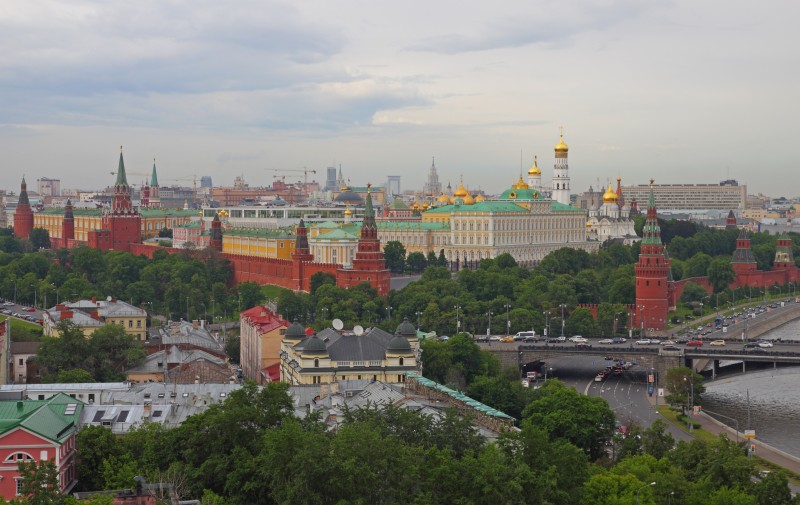
A Moscow court has ordered the transfer of a controlling stake in one of Russia’s largest food producers to the state, citing anti-corruption violations tied to the founder’s former role as a senator.
Billionaire Vadim Moshkovich, along with his family and former Rusagro chief executive Maxim Basov, must hand over their shares in the agricultural conglomerate, according to reports from the state-run news agency Interfax. The move is part of a broader state-led redistribution of private assets that has intensified since the full-scale invasion of Ukraine.
Prosecutors allege Moshkovich breached anti-corruption rules during his tenure in the Federation Council, Russia’s upper house of parliament. Separately, a criminal case accuses him of embezzling roughly $400 million. Both men reject the accusations, and Basov’s lawyer has called the ruling “unfair, unfounded and illegal,” vowing to appeal.
Rusagro is a major player in Russia’s agricultural sector, producing sugar, pork, and oil-and-fat products. The seizure places a vital food-supply chain under state control, reflecting a shift in how the Kremlin handles private property during wartime.
Analysts say the case represents more than a campaign against political opponents. Nikolai Petrov, a consulting fellow at Chatham House, described it as part of a larger wartime redistribution where even loyalists are not immune. “There are no disloyal or non-systemic actors left in Russia—neither in politics nor in business,” he said. “Everyone still wants to eat.”
Moshkovich was not a vocal critic of the Kremlin. He served in the Federation Council from 2006 to 2014 and attended a meeting with President Vladimir Putin on the day the invasion of Ukraine began in February 2022. The European Union sanctioned him, citing his support for the war. He unsuccessfully challenged those sanctions at the EU General Court, with his appeal still pending.
The uptick in government seizures is stark. According to the Russian Analytical Digest, prosecutors launched 17 confiscation cases in 2022, 40 in 2023, and 37 in 2024—nearly 70 cases in 2025 alone. The total value of targeted assets from early 2022 to late 2025 exceeded 4.99 trillion rubles, or about $58 billion.
The legal justifications have varied: corruption, illegal privatization, foreign ownership, strategic-sector restrictions, or claims of harm to state interests. This pattern echoes earlier episodes, such as the dismantling of oil giant Yukos in the 2000s and the seizure of oil company Bashneft after the 2014 annexation of Crimea.
In 2023 and 2024, the state took over car dealer Rolf, first through temporary management and then by nationalization on anti-corruption grounds. Now, the Rusagro case involves a sanctioned businessman with past political ties and a firm in a strategic sector.
The message is clear: In wartime Russia, private property rights are conditional, and even the loyal can be vulnerable.