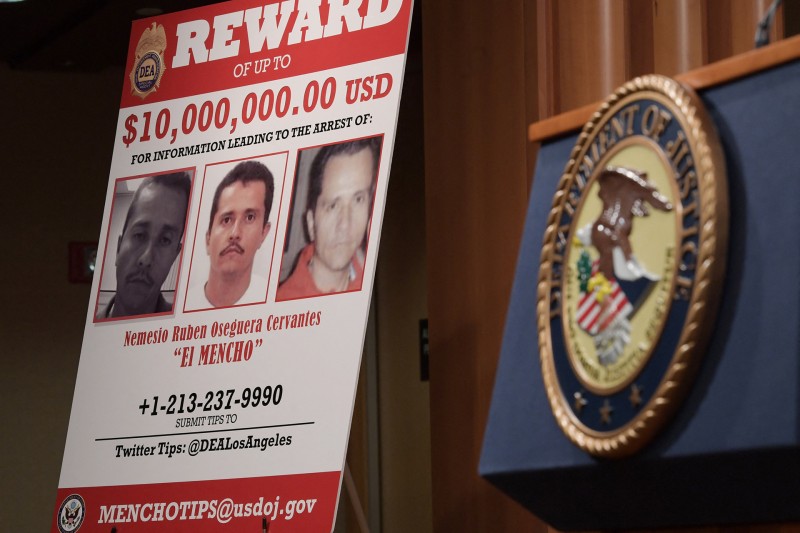
U.S. and Mexican officials lauded the recent military operation that eliminated notorious cartel leader Nemesio “El Mencho” Oseguera Cervantes as a major triumph in the fight against organized crime. Yet decades of evidence suggest such celebrations are premature.
The strategy of removing high-profile crime bosses, long favored by Washington and adopted by Mexico City, rests on a flawed understanding of how modern drug trafficking networks operate. Rather than dismantling these groups, the approach often triggers more bloodshed and fragmentation.
A Flawed Blueprint
When authorities neutralize a cartel head, the organization rarely collapses. Instead, a phenomenon known as the hydra effect takes hold. Like the mythical serpent, for each leader eliminated, multiple successors emerge to fill the void.
“There’s a persistent belief that these are hierarchical structures with a single figure controlling everything,” explained a Mexican journalist tracking organized crime. “The reality is far more complex. They function as interconnected networks.”
Empirical data supports this view. Since Mexico intensified its anti-cartel campaign in 2006, the capture or killing of dozens of kingpins has done little to disrupt drug flows northward. Street prices for cocaine and methamphetamine in the United States have remained relatively stable, while overdose deaths climbed steadily for years.
Violence Multiplies
Research tracking the aftermath of leadership removals reveals a stark pattern. According to one comprehensive study, capturing a cartel boss in a given municipality raises homicide rates by 80 percent, with the effect persisting for at least a year.
The 2008 arrest of Alfredo Beltrán Leyva shattered an alliance between major trafficking groups, sparking a brutal conflict that saw national murder rates skyrocket. By 2010, homicides had climbed 150 percent above pre-campaign levels.
Similar outcomes followed the detention of other prominent figures. The Tijuana Cartel splintered into warring factions after its leader’s arrest. The death of a Sinaloa Cartel founder in 2010 triggered a wave of gruesome executions and territorial battles.
Beyond the Body Count
The damage extends beyond homicide statistics. As cartels fracture, violence becomes less overt but more insidious. Kidnappings and forced disappearances have surged dramatically. In Jalisco, a state long associated with El Mencho’s organization, disappearances exploded by 231 percent in recent years, even as official murder tallies appeared to decline.
One journalist noted that rural communities have been abandoned entirely as criminal factions battle for control. “Family farms, entire settlements—they turn into ghost towns,” he said. “People flee because staying means death or displacement.”
Manufacturing Success
Complicating the picture, authorities have altered how they categorize violent deaths. Security analysts accuse officials of reclassifying intentional homicides as other offenses, artificially lowering crime statistics for political purposes. While reported murders in Jalisco dropped by roughly a third between 2024 and 2025, manslaughter and femicide cases rose, and disappearances exploded.
The Real Problem
Ironically, El Mencho himself benefited from the kingpin strategy. As rivals were systematically removed by security forces, he consolidated power. His elimination does not address the deeper issue: the entanglement of cartels with political and economic elites.
“These criminal groups don’t operate in isolation,” a security expert observed. “They have deep connections with legitimate power structures. Targeting leaders barely scratches that surface.”
The enduring question for Mexico remains not who will succeed El Mencho, but why the state cannot address the networks that sustain organized crime. Until that changes, each victory against a cartel chief may only plant the seeds for the next wave of violence.