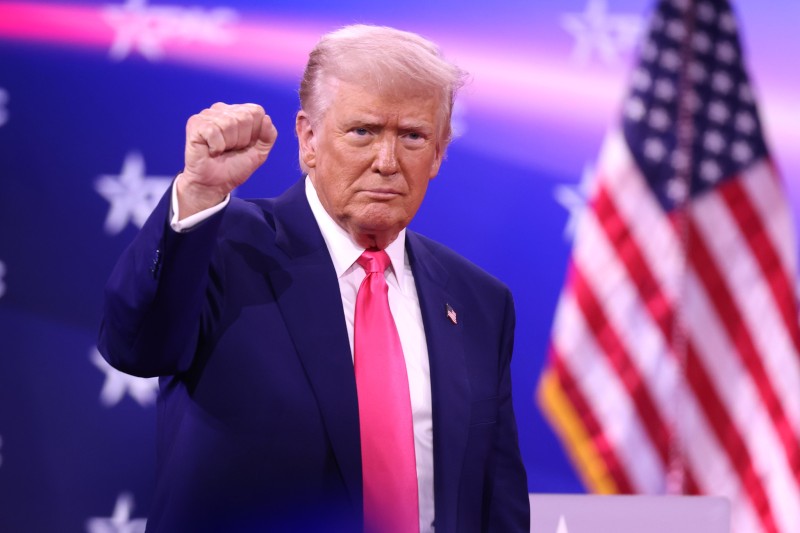
Starting next month, visitors from Dominica and Antigua and Barbuda will face limited access to the United States after a new executive order signed by President Donald Trump on December 16. The move targets these two small Eastern Caribbean states due to concerns that their citizenship-by-investment schemes, often called “golden passport” programs, enabled individuals from countries like Russia and Iran to bypass normal travel and security checks.
A White House statement explained that the restrictions stem from the fact that these programs historically did not require applicants to reside in the country. Under these schemes, wealthy foreigners can obtain citizenship and a passport simply by making a direct payment. The proclamation warned that such arrangements create “challenges for screening and vetting” travelers, posing risks to law enforcement and national security. It specifically noted that they could allow people to hide their identities or assets to circumvent travel, financial, or banking restrictions.
Notably, three other Caribbean nations—St. Kitts and Nevis, St. Lucia, and Grenada—which also run similar citizenship-by-investment programs were not included in the ban.
Dominica’s Prime Minister Roosevelt Skerrit expressed surprise and disappointment over the decision. “Over the past several years, and particularly throughout 2024 and 2025, Dominica has worked closely with the United States through multiple channels,” he wrote on social media a day after the announcement. He emphasized that those discussions addressed Washington’s concerns about the program’s operations. Skerrit said his government is now seeking talks with the Trump administration before the restrictions take effect. “We are seeking clarification on whether the measures already implemented satisfy the conditions referenced in the statement, and if not, what additional actions may be needed,” he added.
The issue gained traction after a 2023 investigation by the Organized Crime and Corruption Reporting Project, which reviewed 7,700 individuals who acquired Dominican citizenship. The probe identified several concerning figures, including Russian oligarchs, suspected members of Iran’s Revolutionary Guard, fugitives wanted for fraud, and individuals linked to war crimes.
In response, Caribbean governments have begun reforming these programs. Steps include raising minimum investment amounts, introducing residency requirements, and strengthening background checks and interviews. In September, the five Caribbean nations with such programs agreed to form the Eastern Caribbean Citizenship by Investment Regulatory Authority, an independent body designed to regulate brokers, enforce anti-money laundering standards, and promote data-sharing to prevent weakening oversight. This authority was developed with input from U.S. agencies, including the Treasury and Homeland Security departments, as well as the European Commission and the British government.
The new body will also collaborate with the Joint Regional Communications Centre, part of the Caribbean’s regional crime and security agency, to coordinate vetting and biometric data collection. This center already works with U.S. Homeland Security and will now manage a regional database of citizenship applicants.
Despite these efforts, Dominica and Antigua and Barbuda have been added to a U.S. travel ban list that now includes 39 countries.