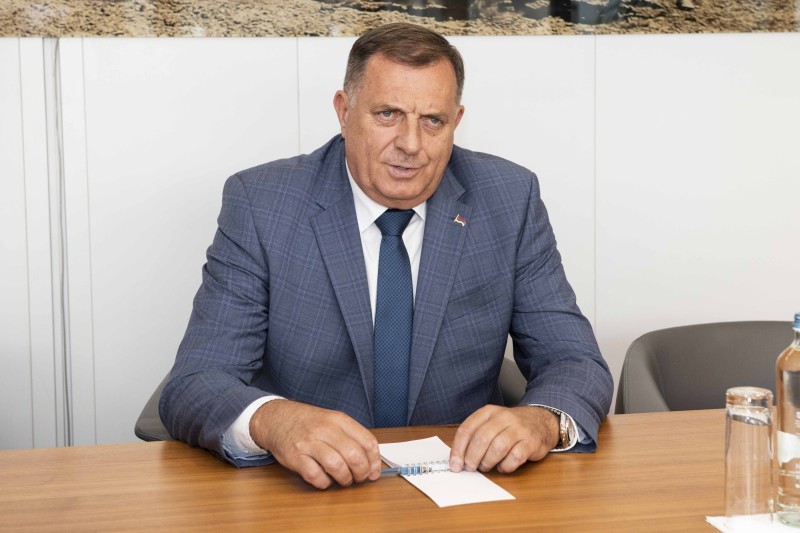
The Trump administration has revoked international sanctions against Milorad Dodik, the influential pro-Russian figurehead of Bosnia’s Serb-majority territory, along with his relatives, numerous supporters, and their businesses. The decision was announced quietly via a Treasury Department notice on Wednesday, just a day after Dodik held talks with Russian diplomat Sergey Lavrov.
Dodik, 65, formerly led Republika Srpska—one of Bosnia’s two autonomous regions—and continues to wield significant political clout there. He was compelled to leave office following a court ruling that barred him from politics for six years and imposed a one-year prison term for ignoring directives from the international supervisor overseeing the nation’s peace framework.
A vocal proponent of separating Republika Srpska from Bosnia and merging with Serbia—a objective that sparked the 1992–1995 conflict—Dodik initially faced sanctions in 2017 for impeding the U.S.-mediated Dayton agreement. In 2023, the Biden administration widened these measures to target his children and various family-associated firms, alleging they helped Dodik divert public money for personal gain.
Despite these penalties, Dodik’s administration invested heavily in lobbying efforts in Washington to overturn them. Figures like former New York Mayor Rudy Giuliani and ex-Illinois Governor Rod Blagojevich, both connected to Trump’s circle, championed his cause. Trump had shortened Blagojevich’s prison term in 2020 and granted a full pardon in February, enabling him to start a lobbying venture.
Blagojevich hailed the sanctions’ removal on social media, framing it as a fresh chapter for the Balkans where Serbian and Croatian Christians could seek real autonomy and stronger ties with America. This followed posts by activist Laura Loomer, who portrayed Christian Serbs as victims in the Bosnian war, warning against Muslim political influence.
However, international tribunals have determined that Bosnian Serb forces were responsible for most atrocities during the conflict, including the Srebrenica genocide where over 8,000 Muslim men and boys were killed.
Some observers suggest the sanctions relief came with conditions. Earlier this year, Republika Srpska’s assembly enacted unconstitutional laws weakening the peace accord, but later reversed them—a move seen as part of a negotiated settlement. Bosnian Foreign Minister Elmedin Konaković described this as a stabilizing step, noting that penalties could return.
U.S. Senator Jeanne Shaheen criticized the decision as hasty and unjustified, pointing to Dodik’s record of undermining the peace agreement, aligning with Putin, and engaging in corruption.