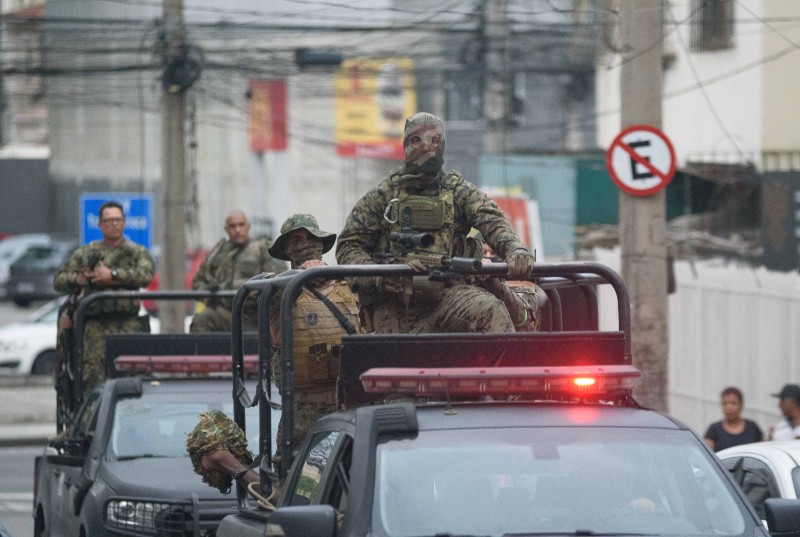
A major security operation targeting a top organized crime group in Rio de Janeiro descended into urban combat early Tuesday, resulting in over 60 fatalities and widespread disruption for residents in the city’s northern areas.
The operation, focused on the Alemao and Penha neighborhoods, pitted around 2,500 law enforcement personnel against the Red Command, a prominent criminal network involved in drug trafficking, arms smuggling, and other illegal activities. Residents described waking up to intense gunfire and explosions starting at dawn.
Witnesses reported that gang members responded with heavy gunfire, burning barricades, and even using a drone rigged with explosives to impede the police advance. One resident, Antonio Carlos Marcos, said he stepped onto his balcony to investigate the commotion and soon discovered a bullet had pierced his living room wall, narrowly missing his family. A video circulating online captured the sound of hundreds of shots fired in under a minute.
Official figures confirmed 64 deaths, including four law enforcement officers, marking the bloodiest single raid in the city’s history. Authorities also reported 81 arrests and the seizure of 93 rifles.
Rio’s governor, Cláudio Castro, expressed condolences for the fallen officers and criticized what he described as insufficient federal assistance, stating the state was “completely alone” in tackling the issue. The operation was dubbed “Containment” by officials.
However, the approach drew sharp criticism from analysts and residents alike. Cecília Olliveira, director of a research group monitoring armed violence, called the operation a “spectacle of war” that fails to weaken criminal networks. She argued that the state’s focus on dramatic raids—rather than intelligence work or social investments—only leads to more bloodshed. “The state is doing its math with the blood of public security agents,” she said.
Residents echoed concerns about the lack of lasting safety. Raull Santiago, a community activist living in Alemao, said the heavy police presence prevented people from working or sending children to school. “What this produces is not safety,” he said, calling instead for funding in education, infrastructure, and youth programs. “No one can stand living between the sound of the alarm clock and the sound of gunfire anymore.”