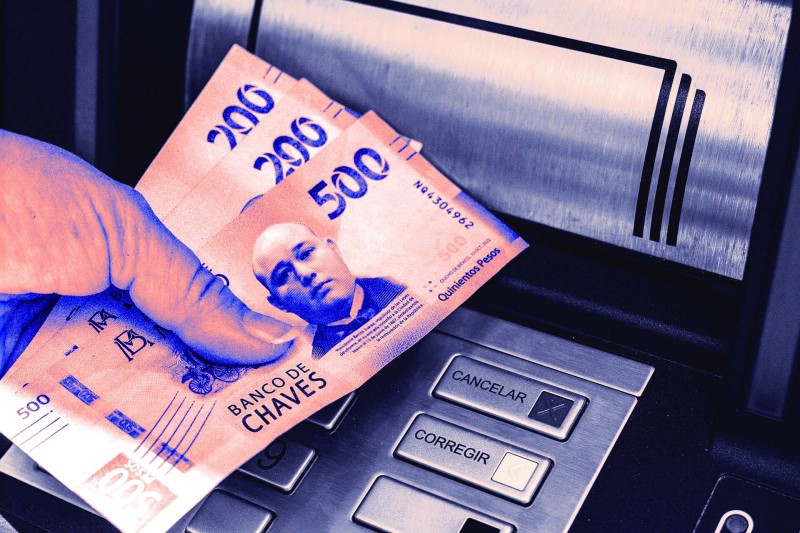
A man wanted by Costa Rican authorities for allegedly orchestrating a massive fraud scheme appears to have discussed purchasing a stake in a Mexican bank, according to intercepted communications contained in leaked legal documents.
Abraham Chaves Arias, identified by prosecutors as a suspect in one of the country’s largest alleged fraud operations, was recorded in May 2023 telling an associate that he had arranged a deal with relatives in Mexico to acquire what he described as a “representation” at a financial institution. The associate responded with surprise, noting the arrangement would allow unrestricted movement of funds.
Although the specific bank wasn’t named in the records, reporting has established that one of Chaves’ first cousins assumed a senior position at a Mexican bank shortly after this conversation took place.
Oscar Moisés Chaves Ramirez was appointed deputy director general of Bankaool, based in Chihuahua, on June 6, 2023, just twelve days following the recorded call. The bank has also stated that Grupo Omni, a technology firm where Chaves serves as CEO, became its majority investor earlier that year.
Since then, Moisés Chaves has become the public face of the institution, spearheading a rebranding campaign that positions it as Mexico’s first digital bank. The bank has engaged in aggressive marketing, including partnerships with major sports teams.
However, investigators have discovered that Moisés Chaves is wanted in Costa Rica on fraud charges, and several of his previous business ventures ended in disputes and outstanding debts. He faces two counts of major fraud and an international arrest warrant for extradition, issued after he failed to appear in court.
When questioned, Moisés Chaves denied his cousin had any role in the bank transaction. He stated the acquisition was made personally and that the funds came from legitimate investments, verified under Mexican regulatory processes. He claimed his initial investment didn’t occur until 2024, a year after the wiretapped conversation.
Mexican regulators have yet to approve the takeover, despite Moisés Chaves already playing a leadership role at the institution. The National Banking and Securities Commission stated in February that relevant departments were still processing the matter.
The Madre Patria case involves properties worth tens of millions of dollars that authorities allege were stolen from owners, often elderly individuals or foreigners, through falsified documents. The properties were subsequently sold, with proceeds laundered through cryptocurrency exchanges.
Authorities launched their investigation after receiving a tip from Spanish police about nearly 12 million euros wired to a Spanish crypto exchange and immediately transferred elsewhere. The case has led to 36 arrests and searches of 47 properties across five Costa Rican towns.
Abraham Chaves has left Costa Rica and an Interpol Red Notice has been issued for his arrest. His current location remains unknown. His brother Jonathan, a lawyer and notary, was detained in June 2024 and remains in preventative custody as a suspect.
Court documents include transcripts of wiretapped conversations where Abraham Chaves discussed the bank acquisition. Prosecutors noted these discussions should be viewed within the context of a criminal organization needing to move capital through accounts that conceal fund origins.
Immigration records confirm both Abraham and Moisés Chaves made multiple trips between countries during the period when the bank deal was being discussed. Costa Rican prosecutors declined to confirm whether Bankaool is involved in the investigation, citing confidentiality.
Moisés Chaves maintains he has no connection to illegal activities and no business ties to his cousin, describing their relationship as solely familial. He continues to promote the bank publicly, discussing expansion plans and the potential for exponential growth, including a possible U.S. stock market debut by early 2026.